Introduction: The “Move More” Myth
If you have been diagnosed with scoliosis, you have probably heard the same advice over and over from well-meaning friends or general practitioners: “Just keep your core strong,” or “You need to do yoga.”
In most cases, movement is medicine. We know that a sedentary lifestyle is the enemy of longevity. But when you have a curved spine, not all movement is created equal.
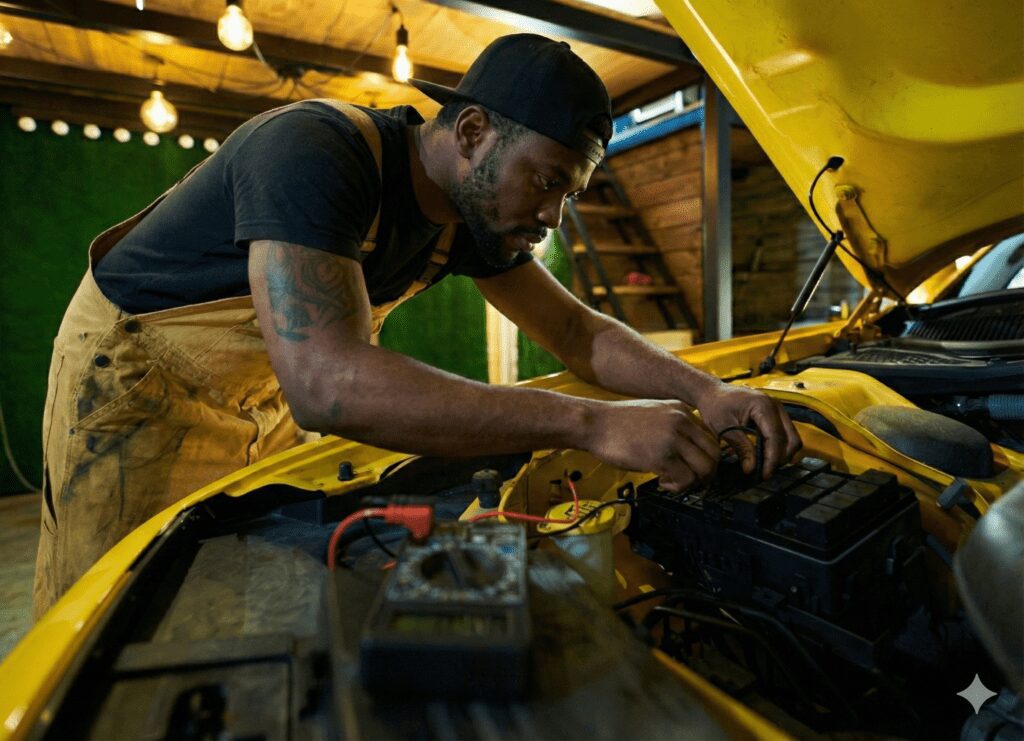
Imagine your car’s alignment is off. The tires are wearing down unevenly on one side. If you drive that car faster and harder on a race track, you don’t fix the alignment—you just blow out the tires faster.
The same is true for scoliosis. If you have a three-dimensional curve in your spine and you do the wrong exercises, you might be strengthening your body into its twisted posture. You could be making the curve more rigid and harder to correct.
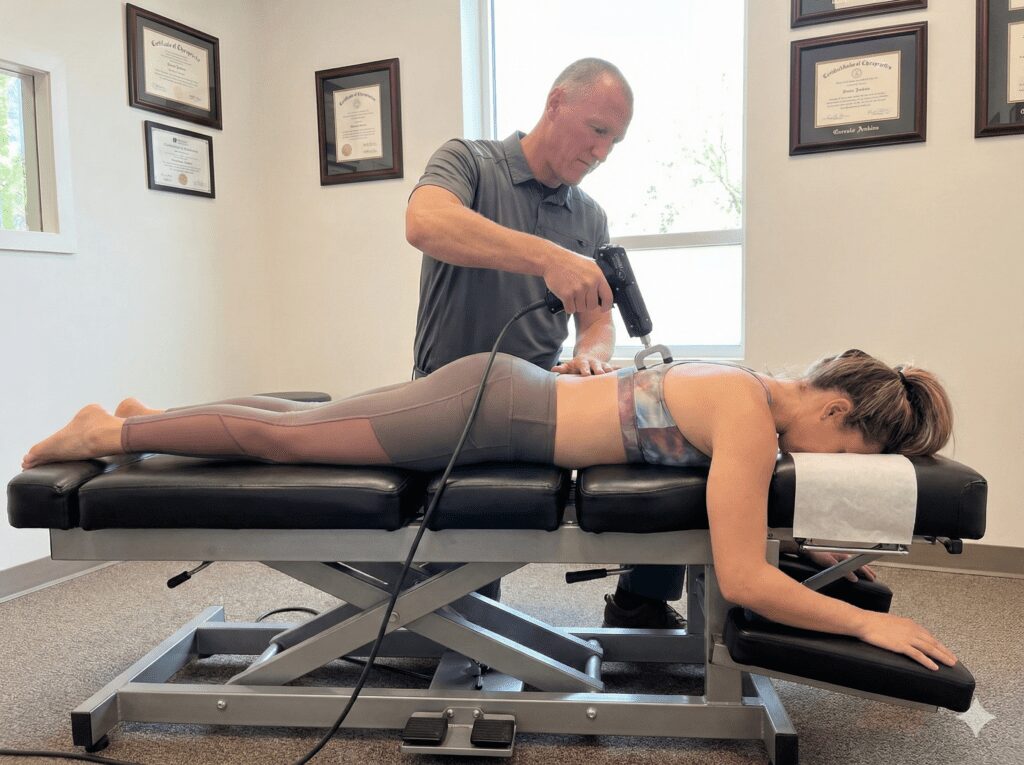
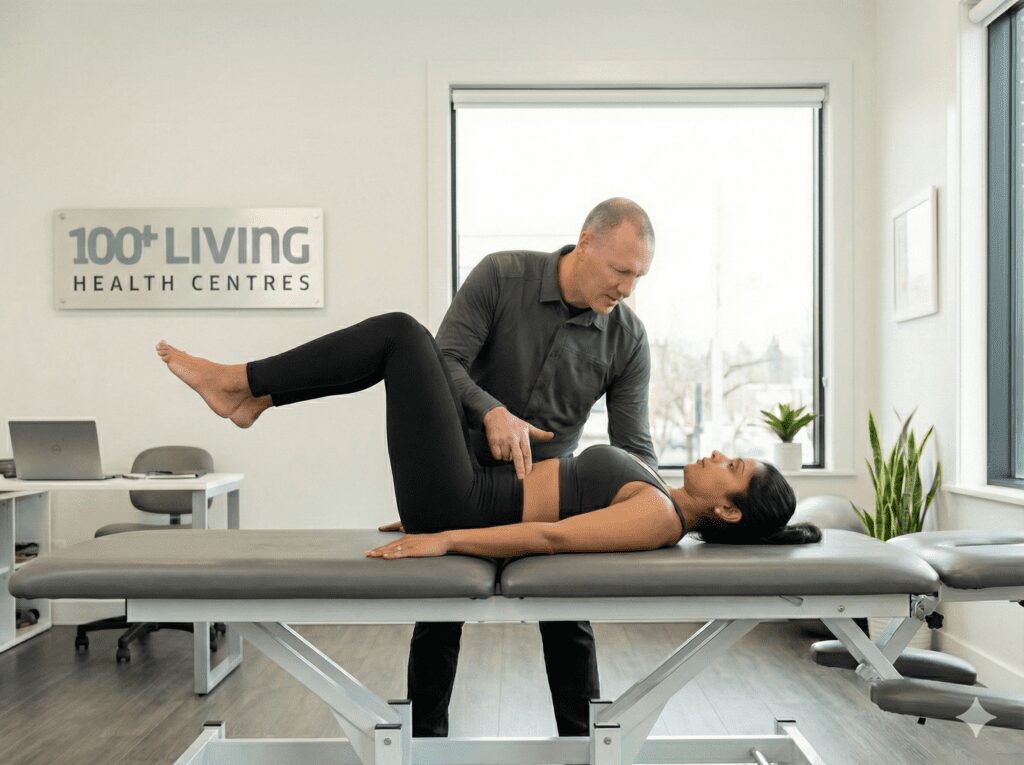
As an Advanced Certified Chiropractic BioPhysics (CBP) doctor—one of the few in British Columbia—I see this happen too often. Patients come to our 100+Living Health Center with back pain or worsening curves because they were doing “healthy” exercises that were actually dangerous for their unique spine mechanics.
In this deep-dive guide, we are going to look at exactly which exercises you should avoid, the safe alternatives you can start today, and why “general” chiropractic or physical therapy isn’t enough to manage a complex condition like scoliosis.
Why Your Spine is Different (The 3D Problem)
Scoliosis is not just a “crooked back” that bends to the side. It is a complex, three-dimensional condition.
Your spine isn’t just bending; it is often twisting and rotating. This creates a massive imbalance in how your body handles gravity.
-
On the concave side (the inside of the curve): Muscles are often short, tight, and jammed. The ribs are pushed together.
-
On the convex side (the outside of the curve): Muscles are stretched, weak, and tired. The ribs are splayed open.
When you do a generic exercise—like a heavy squat or a twisting stretch—you aren’t fixing this imbalance. Often, the strong muscles just take over and pull you further into the curve. This is why we need to be incredibly selective about what we do in the gym.
Part 1: The “No-Go” List (Exercises to Avoid)
Please note: Every spine is different. Always consult your Advanced Certified CBP doctor before starting or stopping a routine. However, these are the most common offenders for scoliosis patients.
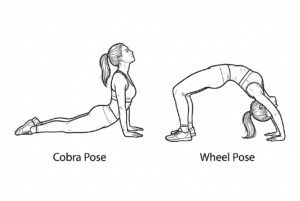
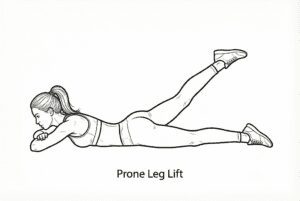
1. Hyperextensions (Back Bends)
The Offenders:
-
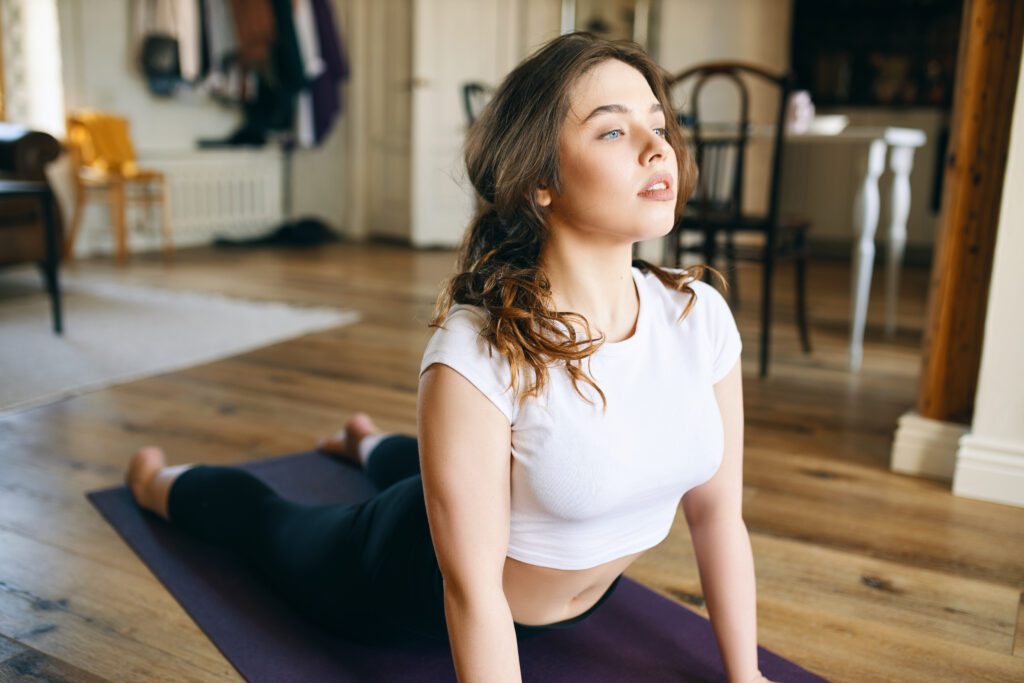
Yoga “Cobra” or “Wheel” poses.
-
Gymnastics bridges.

-
“Superman” exercises (lying on your stomach, lifting chest and legs high).
-
Prone leg lifts.


Why to avoid them:
Scoliosis often flattens the natural curve of the middle back (the thoracic spine). In medical terms, we call this “hypokyphosis.” The thoracic spine is supposed to have a nice, round outward curve. In many scoliosis cases, that curve disappears, and the back becomes dangerously flat.
When you do a deep back bend, you are forcing the spine further into this flat position. This can “jam” the facet joints—the small hinges on the back of your spine. It puts immense pressure on the concave side of your curve, potentially causing pain and locking the curve in place. You are essentially pushing the spine in the direction it is already dangerously leaning.
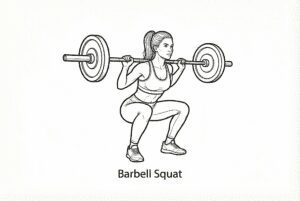
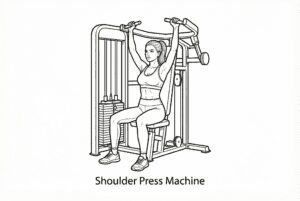
2. Heavy Spinal Loading (Axial Compression)
The Offenders:
-
Barbell squats (with the heavy bar resting on your neck/shoulders).
-
Overhead military press / Shoulder press.
-
Heavy deadlifts.
-
Running long distances on concrete (high impact).


Why to avoid them:
Gravity is already a challenge for a scoliotic spine. When you add heavy weight on top of your shoulders, you are compressing the spine downwards.
Think of a straight pillar holding up a roof. It is strong. Now think of a bent pillar. If you put a heavy weight on top of the bent pillar, it doesn’t get straighter—it buckles further to the side.
If your spine is curved, that heavy barbell acts like a giant hand pushing down on a spring. It wants to buckle the curve further. We want to elongate the spine to relieve pressure, not squash it down.
3. Twisting and Torquing
The Offenders:
-
Russian twists (sitting and twisting a weight side-to-side).
-
“Lumberjack” cable chops.
-
Deep spinal twist yoga poses (especially if forcing the stretch).
-
Torso rotation machines at the gym.


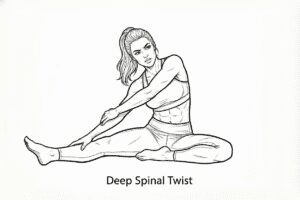
Why to avoid them:
This is the most common mistake I see. People feel tight, so they think, “I should twist my back to pop it or stretch it out.”
But remember: Scoliosis is a rotational issue. The vertebrae are twisted. When you do a generic twisting exercise, you often twist into the existing rotation, which makes the rib hump worse. You are feeding the pattern, not fixing it. Unless a doctor has told you specifically which way to rotate to un-wind your spine, generic twisting is a gamble you shouldn’t take.
4. High-Impact Trampolines
Why to avoid them:
Jumping on a trampoline creates a high “G-force” on landing. For a child or adult with an unstable spine, that repeated compression-and-release can be damaging to the discs and the curve itself. It is unpredictable force that a scoliotic spine cannot dampen effectively.
Part 2: The Alternatives (What to Do Instead)
You don’t have to stop moving. In fact, we want you to build a “100+Fitness” body. We just need to change the mechanics so you are stabilizing your spine rather than shearing it.
Here are the smarter, safer swaps.
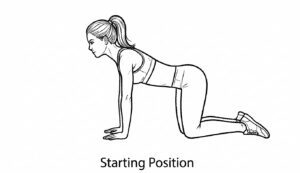
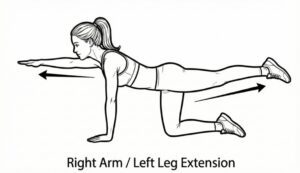
Swap #1: Instead of “Supermans” → Do “Bird-Dogs”
The “Superman” exercise compresses the facet joints. The “Bird-Dog” builds core stability without crushing the spine.
How to do it:
-
Start on your hands and knees (tabletop position). Keep your spine neutral (flat like a table), not sagging or arching.
-
Reach your Right Arm forward and your Left Leg back. Imagine you are reaching for a wall in front of you and a wall behind you.
-
Key Tip: Do not lift them as high as you can. Reach as far as you can. We want length, not height.
-
Hold for 5–10 seconds. Breathe.
-
Switch sides.
Why it works:
This is a “cross-crawl” pattern. It engages the deep stabilizers of the spine (the multifidus muscles) without bending the spine backward. It teaches your brain how to balance without locking up your joints.
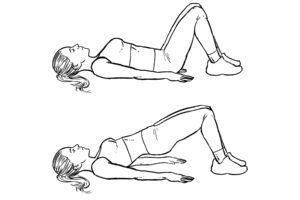
Swap #2: Instead of Barbell Squats → Do “Bodyweight Glute Bridges”
We want to strengthen your legs and glutes (buttocks) without putting a heavy bar on your spine.
How to do it:
-
Lie on your back with your knees bent and feet flat on the floor.
-
Press your heels into the ground and lift your hips up toward the ceiling.
-
Squeeze your glutes at the top.
-
Lower down slowly.
Why it works:
This strengthens the posterior chain (the back of your legs and hips) which supports your spine, but it does it while you are lying down. This takes gravity out of the equation. There is zero compression on your discs.
Swap #3: Instead of Sit-Ups or Twists → Do “Side Planks”
Sit-ups involve repetitive flexion (bending forward), which can be hard on discs. Side planks build an isometric “shield” around your spine.
How to do it:
-
Lie on your side with your elbow (or if you feel strong enough, have your arm straight) directly under your shoulder.
-
Lift your hips off the ground so your body forms a straight line from head to ankles.
-
Hold this position. Do not let your hips sag!
-
Start with 10 seconds and build up to 45 seconds.

Why it works:
Research implies that side planks can be particularly beneficial for scoliosis curves when done on the correct side, but even as a general exercise, they are superior to sit-ups. They force the muscles of the spine (quadratus lumborum and obliques) to hold the spine stiff and straight, resisting gravity. This is exactly the kind of strength a scoliotic spine needs.
Swap #4: Instead of Running → Do “Nordic Walking” or Swimming
Running is high impact. Every time your foot hits the pavement, a shockwave travels up to your spine.
What to do instead:
-
Nordic Walking: Walking with poles. This engages your upper body and core, takes some weight off your spine, and increases your heart rate without the high impact.
-
Swimming: Being in water removes gravity. It allows your joints to decompress. (Note: Avoid competitive butterfly strokes which involve heavy hyperextension, but general swimming is usually excellent).
Part 3: The “Expert” Trap (Why General Care Isn’t Enough)
You might be thinking, “But my general chiropractor or physiotherapist gave me these exercises. Are they wrong?”
They aren’t necessarily “wrong,” but they may be operating with an incomplete toolbox.
There is a massive difference between a General Chiropractor and a doctor who is Advanced Certified in Chiropractic BioPhysics (CBP).
The Diagnostic Gap: Correction Potential X-Rays
Most general chiropractors will take a standard X-ray of you standing still. This tells us what your spine looks like. That is a good start, but it is not enough.
At 100+Living, because of our Advanced CBP training, we use Correction Potential X-Rays (often called stress X-rays).
What is a Correction Potential X-Ray?
We don’t just X-ray you standing there. We X-ray you while you are bending or leaning into specific positions.
-
We want to see: How flexible is this curve?
-
We want to see: What happens to the curve when we shift your posture?
This is like looking into a crystal ball. It tells us exactly how much correction is possible. Standard chiropractors simply do not do this. They are guessing at your flexibility. We are measuring it.
If we see that your spine straightens out significantly when you lean to the left, we know that is a “correction potential.” We can then design a treatment plan to lock that correction in. Without these specific X-rays, you are flying blind.
The Treatment Gap: Mirror Image® Exercises
General exercise is generic. Mirror Image® exercise is specific.
If your spine lists to the left and rotates right, doing a normal plank just makes you a stronger version of that crooked pattern.
As an Advanced Certified CBP doctor, I prescribe Mirror Image® exercises. We place you in the exact opposite position of your curve.
-
If you lean left, we shift you right.
-
If you are twisted forward, we pull you back.
-
Then, we have you perform exercises in that over-corrected position.
This stretches the tight muscles, strengthens the weak muscles, and retrains the brain all at once. It is precise engineering for your spine.
Part 4: The Neurology of Posture (It’s All in Your Head)
Why is it so hard to “stand up straight” when you have scoliosis?
It’s not just because your muscles are weak. It’s because your brain has a wrong map.
Dr. Heidi Haavik is a world-renowned researcher in spinal function. Her research has proven that when the spine is not moving correctly (subluxation), it changes how the brain processes information. This is called Sensorimotor Integration.
Think of it like a GPS signal. If the signal is clear, the brain knows exactly where your back is in space. In scoliosis, that signal is fuzzy. Your brain thinks you are standing straight, even when you are leaning 15 degrees to the side.
Research shows that specific spinal adjustments can actually change activity in the prefrontal cortex—the part of the brain that acts as the “conductor.” By correcting the spine using CBP methods, we aren’t just moving bones; we are clearing up that GPS signal so your brain can control your muscles properly again.
This is why generic exercise fails. You cannot strengthen a muscle if the brain can’t “find” it.
A Note on Bracing
Sometimes, exercise and adjustment alone are not enough, specifically in aggressive curves or in adolescents who are still growing.
At 100+Living, we do not dabble in bracing. We believe in working with the absolute best. That is why for all our bracing needs, we refer directly to Dr. Brad Gage.
Dr. Gage is a world leader in brace fitting. He ensures that when a brace is appropriate, it is the right fit, the right type, and it does the job. Bracing is an art and a science, and a poorly fitted brace can do more harm than good. By partnering with Dr. Gage, we ensure our patients get the “Gold Standard” of care for every aspect of their scoliosis journey.
Your Next Step: Stop Guessing
Scoliosis is a lifelong condition, but it does not have to be a life sentence of pain or limitation. You can live a vibrant, active, 100+ life—you just need the right roadmap.
Please, stop guessing with YouTube workouts. Stop doing exercises that might be grinding your spine down.
If you are in the Kelowna area, or if you can travel, come see us at 100+Living Health Center.
-
We are the only Advanced Certified CBP office in the Interior of British Columbia.
-
We will take the necessary Correction Potential X-rays to see what your spine is truly capable of.
-
We will build a custom plan that includes Mirror Image® exercises and adjustments.
Take the Next Step
Don’t settle for temporary relief. Get care that helps correct the cause of your condition.
Step 1:
Start with a free 10-minute phone consult to discuss your symptoms and see if our approach is right for you.
Step 2:
Book your first comprehensive exam and consultation and get started.
References & Further Reading
The following resources were referenced in this article to provide evidence-based guidelines for scoliosis management, spinal neurology, and exercise safety.
1. Chiropractic BioPhysics® (CBP) & Structural Correction
-
Harrison, D. E., et al. (2017). Reduction of progressive thoracolumbar adolescent idiopathic scoliosis by chiropractic biophysics® (CBP®) mirror image® methods. (PubMed Central). Read the Study
-
CBP Non-Profit. Research Archive: The Science of Spinal Correction. View the Archive
2. Neurology & Brain Function (Dr. Heidi Haavik)
-
Haavik, H., & Murphy, B. (2010). The effects of spinal manipulation on central integration of dual somatosensory input observed after motor training: a crossover study. (PubMed). Read the Study
-
Christiansen, T. L., et al. (2016). Impact of Spinal Manipulation on Cortical Drive to Upper and Lower Limb Muscles. (ResearchGate). Read the Study
-
Australian Spinal Research Foundation. Adjusting The Subluxated Spine Changes Brain Function. Read the Article
3. Exercise Safety & Contraindications
-
Scoliosis Center of Utah. Scoliosis Exercises to Avoid and Better Alternatives. Read the Guide
-
Scoliosis SOS Clinic. Scoliosis Exercises to Practice and Avoid for Spinal Health. Read the Guide
-
ScoliCare. Scoliosis Specific Exercise Rehabilitation. Visit ScoliCare
4. Recommended Partners
-
Dr. Brad Gage (Scoliosis Solutions). World-class custom bracing and scoliosis management. Visit Scoliosis Solutions
Medical Disclaimer: The information provided in this article is for educational purposes only and does not constitute medical advice or diagnosis. Always consult with an Advanced Certified CBP Doctor or a qualified healthcare professional before beginning any new exercise program, especially if you have a spinal condition.