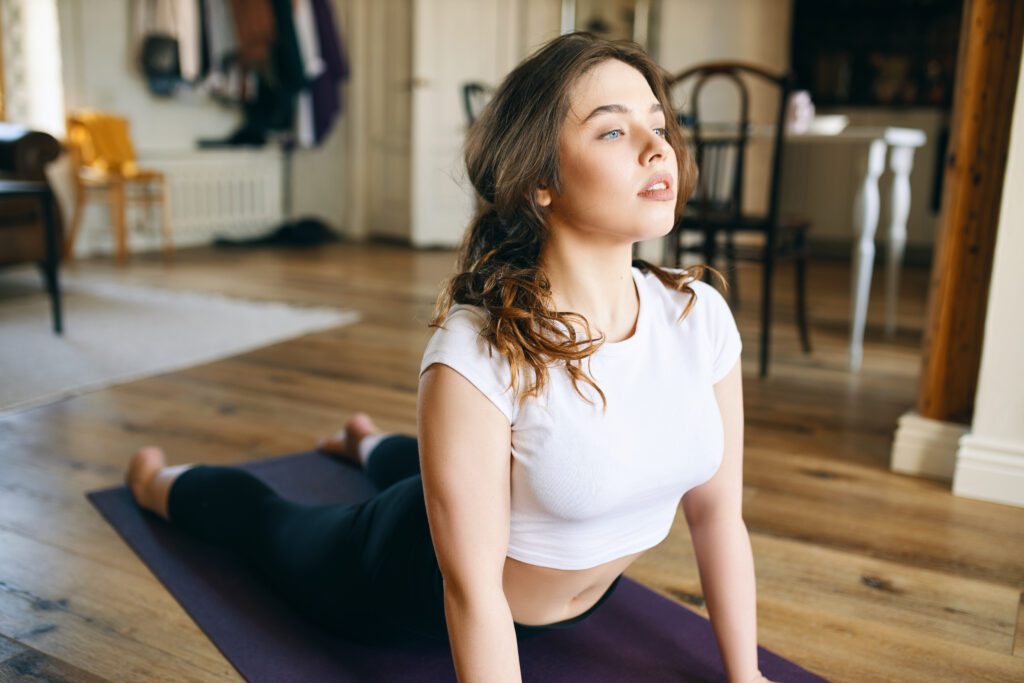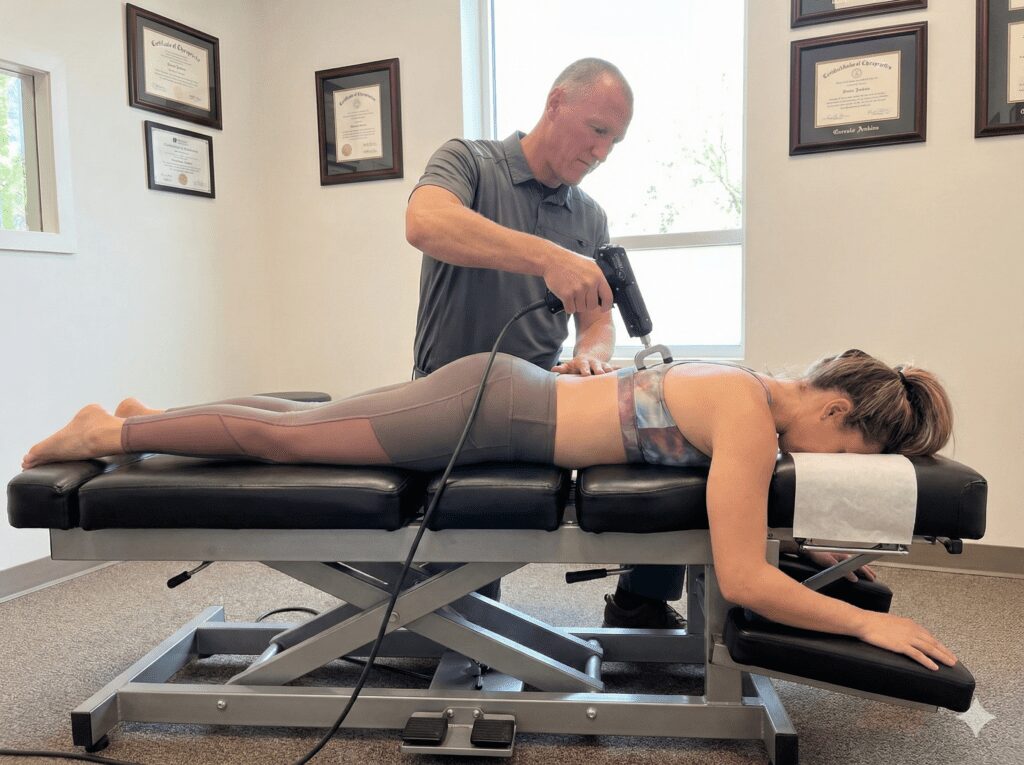
Do you ever wonder why you have neck pain after certain exercises in the gym? Maybe it happens after a Pilates class that everyone else seems to love. You leave feeling stiff and sore, even though you followed the instructor perfectly.
Do you ever wonder why your lower back aches for days after following a program outlined by a trainer? He might even be watching you, nodding, and saying, “You have perfect form.” Yet, you pay the price for days afterward.
It is incredibly frustrating. You are trying to do the right thing. You are trying to get strong. But instead of feeling better, you feel broken.
Here is the truth: “Perfect form” only works for a perfect spine.
If you have a hidden condition called spinal instability, standard exercises can be dangerous. Your muscles might be strong enough to lift the weight, but your ligaments—the tough bands that hold your bones together—might not be durable enough to handle the load [1].
In this guide, we are going to look at why this happens. We will cover the “No-Go” exercises that often trigger pain in unstable spines, the safe alternatives you can use to stay strong, and how a specific approach called Chiropractic BioPhysics (CBP) can help stabilize your spine for the long haul.
Part 1: What is Spinal Instability?
Think of your spine like a mast on a sailboat. The muscles are the ropes (rigging) that pull the mast tight. The ligaments are the bolts and structure that hold the mast to the boat.
If the bolts are loose (instability), it doesn’t matter how tight you pull the ropes (muscles). The mast is going to wobble. If you pull too hard on a wobbly mast, it might even snap [2].
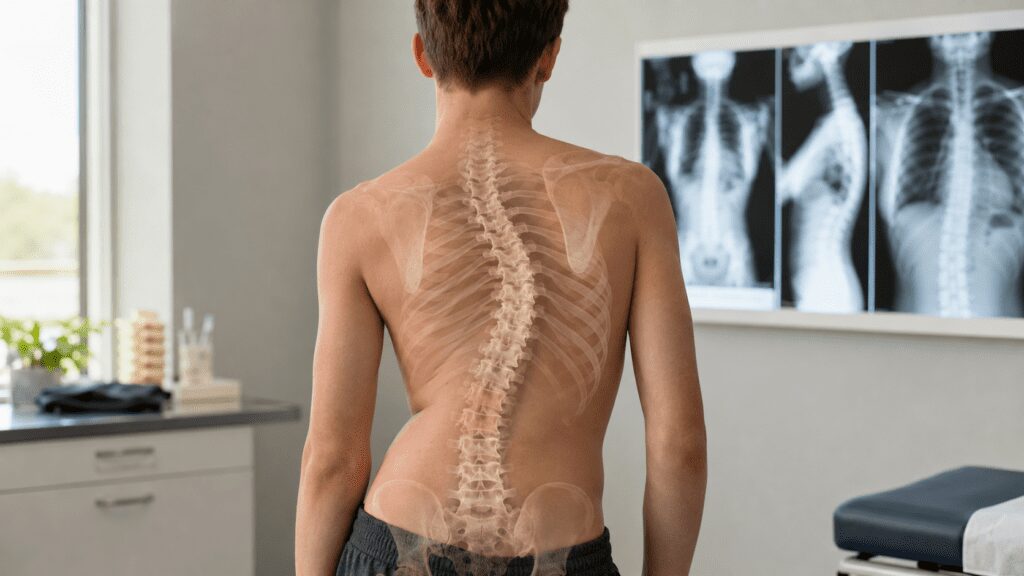
Spinal instability means the ligaments that hold your vertebrae (spine bones) together have been damaged or stretched. This allows the bones to slide around more than they should.
How Does It Happen?
It isn’t always from a major accident. It can come from:
-
Whiplash injuries: Like a car crash you had years ago.
-
Sports injuries: Multiple concussions or hard hits in hockey or football.
-
Degenerative changes: Wear and tear over time that thins the discs and loosens the joints.
When you have instability, exercises that create “shear forces” (sliding forces) can cause inflammation, pain, and muscle spasms as your body tries to lock everything down to protect you.
Part 2: The Neck (Cervical Spine) – The Hidden Danger in the Gym
Your neck is designed to be mobile, but that mobility comes at a cost: stability. If you have suffered a whiplash injury or concussions in the past, your upper cervical ligaments (the ones connecting your skull to your neck) might be compromised [3].
The Problem: Extension and Load
The upper neck gets very unhappy when you combine extension (looking up/tilting head back) with load (heavy weights).
The “No-Go” Exercises for Neck Instability
1. The Overhead Press (Military Press)

This is a classic shoulder builder, but it is risky for an unstable neck.
-
Why it hurts: To clear the bar past your chin, you naturally have to extend your head backward slightly. Then, as you push up, your upper trapezius muscles contract violently. These muscles attach to your neck vertebrae. If those vertebrae are unstable, the pull of the muscle creates a shearing force that irritates the nerves.
2. The Bench Press (specifically the “Powerlifter Arch”)
-
Why it hurts: Watch someone really struggling to get that last rep on a bench press. What do they do? They drive their head back into the bench. This puts the neck into aggressive extension under pressure.
-
The Result: You might finish the set, but you wake up the next morning with a “crick” in your neck or a migraine. This is a classic sign that you have irritated an upper cervical instability.
Safe Alternatives for the Neck
You still need strong shoulders. Here is how to train without the pain.
-
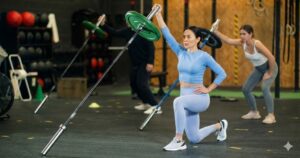
Swap Overhead Press for: Landmine Presses.
-

Why: The bar moves forward and up, not straight up. You can keep your chin tucked and your neck neutral.
-
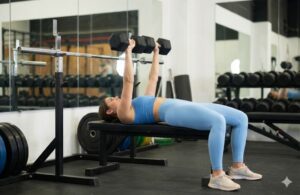
Swap Bench Press for: Floor Press or Dumbbell Press (Head Supported).
-
Why: Lying on the floor limits how far your elbows go down, reducing the strain on the neck. Ensure you keep your head flat on the ground/bench—do not push into it.
-
Isometric Neck Holds:
-
Instead of moving your neck against weight, simply push your hand against your forehead and resist without moving. This builds stability without grinding the joints.
-
Part 3: The Low Back (Lumbar Spine) – When “Strong” Isn’t Enough
The lower back takes the most abuse in the gym. For people with instability, specific movements are devastating [4].
We often see three types of instability here:
-
Anterolisthesis: The vertebra slips forward.
-
Retrolisthesis: The vertebra slips backward.
-
Laterolisthesis: The vertebra slips sideways.
If you have these, your spine literally cannot handle the “shear” force of certain movements, no matter how strong your abs are.
The “No-Go” Exercises for Lumbar Instability
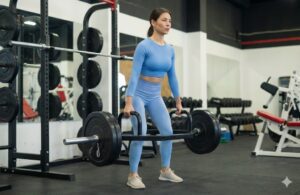
1. The Deadlift
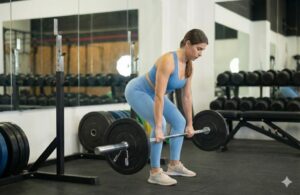
We know, deadlifts are considered the king of exercises. But if you have an anterolisthesis (forward slip), a heavy deadlift pulls that bone further forward [4].
-
Why it hurts: As you lean over, gravity and the weight of the bar pull the vertebra forward. Your ligaments are supposed to stop it. If they are damaged, the bone slides, irritating the nerve roots and the disc.
2. Good Mornings
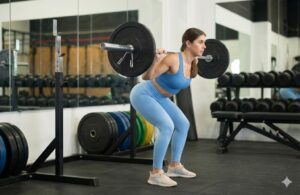
This exercise involves putting a barbell on your shoulders and bending forward at the hips.
-
Why it hurts: This creates massive leverage on the lower back. It is almost pure shear force. For someone with a retrolisthesis or a spondylolisthesis, this is essentially forcing the instability to get worse.
3. Weighted Side Bends
-
Why it hurts: If you have laterolisthesis (side slipping), adding weight to a side bend forces that bone to slide further out of alignment.
Safe Alternatives for the Low Back
-
Swap Deadlifts for: Trap Bar Deadlifts (high handles).
-
Why: The weight is centered around your body, not in front of it. This allows you to stay more upright, reducing shear force on the spine.
-
Swap Good Mornings for: Sled Pushes.
-
Why: Sled pushes build incredible glute and hamstring strength (the posterior chain) without putting any vertical load or shear force on the spine. It is one of the safest ways to train legs with back pain [4].
-
The “Big 3” (Dr. Stuart McGill):
-
Bird-Dogs, Side Planks, and Curl-Ups. These build stiffness and endurance in the core without bending the spine [5].
-

Part 4: The Real Solution – Correcting the Structure
Avoiding dangerous exercises is smart. But it is only a management strategy, not a cure. To truly fix the problem, you need to address the instability itself.
This is where Chiropractic BioPhysics (CBP) is different from standard chiropractic or physical therapy [6,7].
Most therapies focus on symptom relief (massage, heat, standard manipulation). CBP focuses on structural correction and objectively measuring improvement [6].
The Gold Standard: Advanced Certified CBP
At 100+ Living Health Centers, we don’t guess. We measure. Dr. Graham Jenkins is one of only a handful of Advanced Certified CBP doctors in the world [41, 118]. This advanced certification means our team has undergone rigorous training in the biomechanics of the spine.
Here is how we tackle spinal instability:
1. Precision X-Rays
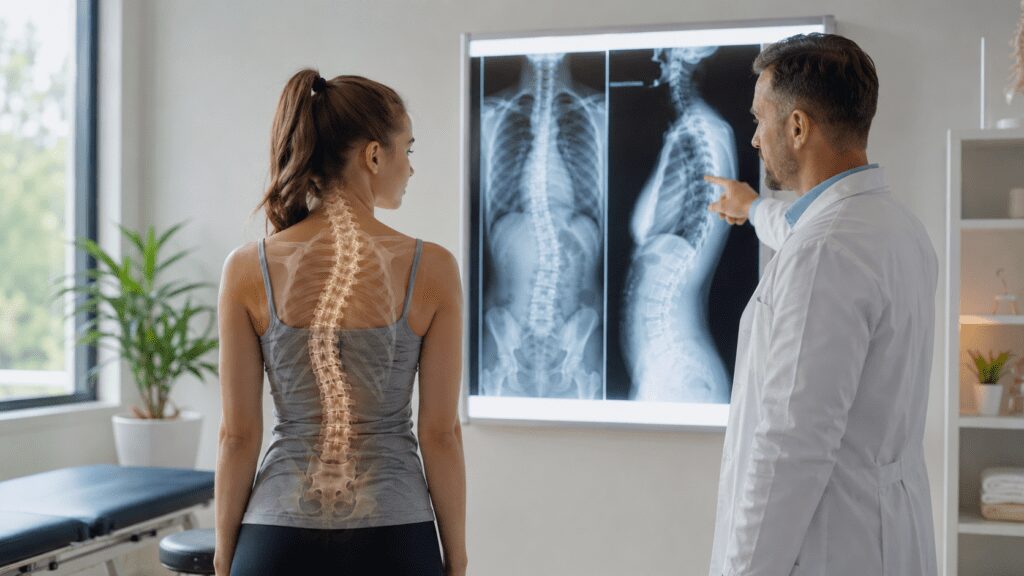
We can’t fix what we can’t see. We take specific X-rays to measure the exact millimeters of instability. We look for those slips (anterolisthesis or retrolisthesis) that other doctors might miss.
2. Mirror Image® Adjustments
If your spine is shifted to the left, we don’t just “crack” it. We adjust it into the mirror image—pushing it to the right. This signals the nervous system to accept a new, centered position.
3. Spinal Traction
This is the game-changer for stability. Traction involves gently stretching the spine into its ideal shape and holding it there. Over time, this helps remodel the ligaments and discs [7]. We use 3-D traction technology designed to restore the natural curves of the spine [5,1,6].
-
For the neck: This helps restore the curve, taking tension off the spinal cord.
-
For the back: It can help reduce the slide of unstable vertebrae.
4. Bracing and Support
For severe instabilities or scoliosis, we may use advanced bracing to hold the spine in a corrected position while it heals.
Conclusion: Train Smart, Live Long
You don’t have to give up the gym. You just have to train for the body you have, while working toward the body you want.
If you have been wondering why “perfect form” still hurts, it is likely not your form—it’s your structure.
Don’t guess with your spine. If you are experiencing pain after exercise, come see the experts. We can determine if you have spinal instability and build a plan to fix it, so you can get back to lifting, moving, and living without fear.
About Dr. Graham Jenkins
Dr. Graham Jenkins is the founder of 100+ Living Health Centers and a leader in spinal rehabilitation. He brings over 30 years of experience to his practice and holds an Advanced Certification in Chiropractic BioPhysics (CBP) [41, 118]. Dr. Jenkins is dedicated to helping families live long, strong, vibrant lives through posture restoration and neurological correction. His clinic is the only Advanced Certified CBP office in the Interior of British Columbia [1,2,1].
Ready to Fix the Root Cause?
Stop modifying your life around your pain. Schedule your New Patient Experience at our Kelowna clinic today. Let’s find out exactly what is going on with your spine and build a roadmap to fix it.
Take the Next Step
Don’t settle for temporary relief. Get care that helps correct the cause of your condition.
Step 1:
Start with a free 10-minute phone consult to discuss your symptoms and see if our approach is right for you.
Step 2:
Book your first comprehensive exam and consultation and get started.
Disclaimer: This content is for educational purposes only and does not replace professional medical advice. Always consult a qualified healthcare provider before making changes to your health plan [1,4,7].
References
-
Panjabi MM. The stabilizing system of the spine. Part I. Function, dysfunction, adaptation, and enhancement. Journal of Spinal Disorders.
-
Panjabi MM. A hypothesis of chronic back pain: ligament subfailure injuries lead to muscle control dysfunction. European Spine Journal.
-
Harrison DE, et al. Structure and Function of the Cervical Spine. Journal of Manipulative and Physiological Therapeutics.
-
McGill SM. Low Back Disorders: Evidence-Based Prevention and Rehabilitation. Human Kinetics.
-
McGill SM. Stabilizing the spine: the role of the lumbar musculature. Journal of Biomechanics.
-
Oakley PA, et al. Evidence-based protocol for structural rehabilitation of the spine and posture: Review of clinical biomechanics of posture (CBP) publications. Journal of Canadian Chiropractic Association.
-
Harrison DE, et al. Increasing the cervical lordosis with chiropractic biophysics seated combined extension-compression and transverse load cervical traction with lower neck support. Journal of Manipulative and Physiological Therapeutics.