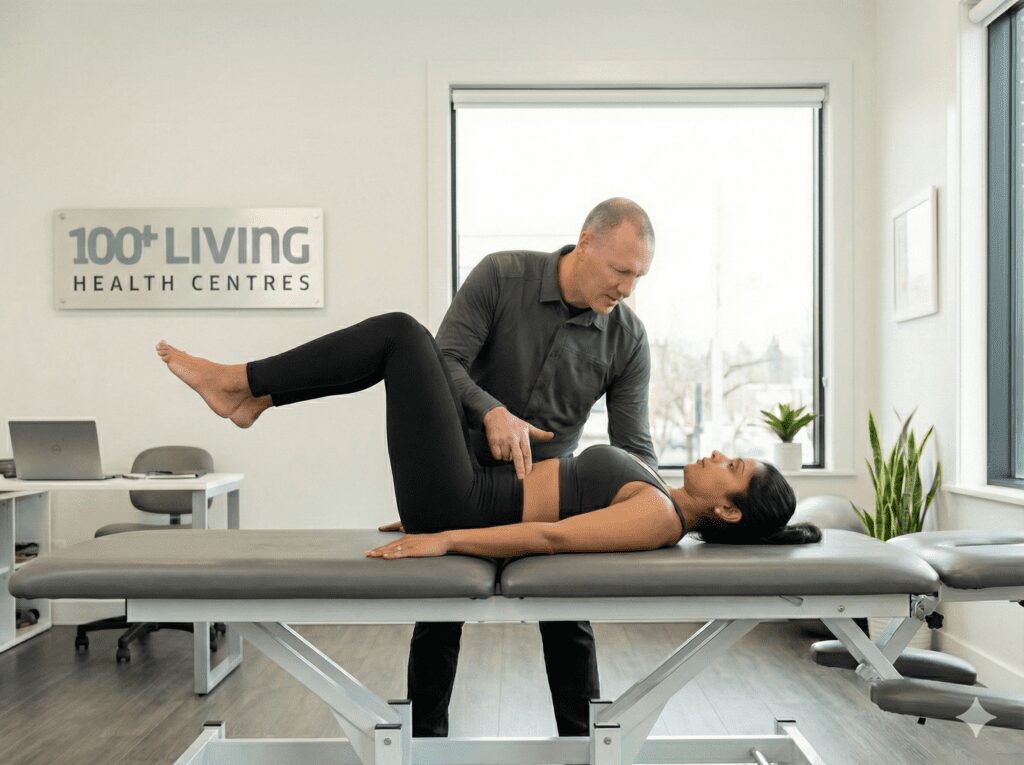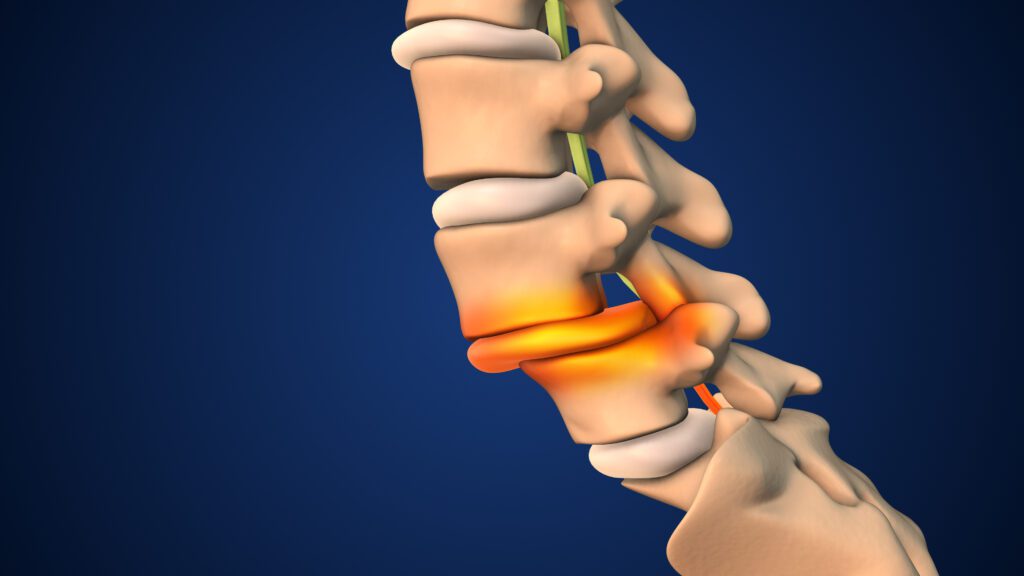
If you’ve ever stood in our office with your eyes closed while we asked you to “bounce your knees, shrug your shoulders, nod your head… now come to what feels neutral,” you’ve already experienced the first step of Mirror Image adjusting.
It looks simple from the outside. But it’s actually one of the most powerful, research-based ways we have to change posture, re-balance the nerve system, and help your body move out of chronic pain patterns and toward long-term correction.
This article will walk you through what Mirror Image adjusting is, why it’s different from traditional chiropractic, and why we talk so much about proprioception – your “sixth sense” – when we talk about spinal correction.
You’ll also see how the pieces fit together: corrective tables, adjusting instruments, Mirror Image exercises, and home spinal orthotics (traction). By the end, you’ll understand not just what we’re doing, but why it matters for your long-term health and longevity.
The big idea: Posture, neurology, and your sixth sense
Most people think of posture as a “stack of bones” problem.
From a Chiropractic BioPhysics (CBP) perspective, posture is just as much a brain and nerve system problem as it is a bone and muscle problem. CBP is a chiropractic technique that focuses on restoring normal spinal curves and posture using a combination of postural analysis, Mirror Image adjustments, specific exercises, and traction. (Chiropractic BioPhysics)
To understand Mirror Image adjusting, we need to talk about proprioception.
Proprioception is sometimes called the sixth sense. It’s your body’s built-in GPS. It tells your brain where you are in space without you needing to look. Research describes proprioception as the sense of body position and movement that helps you coordinate posture, balance, and joint control. (Physiology Journals)
You use this sense constantly:
- When you can touch your nose with your eyes closed.
- When you walk up stairs in the dark without looking at every step.
- When a cat lands on its feet after falling – its proprioception is exceptional.
Posture is the visible result of how well this sixth sense is working. If your proprioceptive system has “learned” a twisted, slumped, or shifted posture as normal, you will stand like that even if it’s harmful to your joints, discs, and nerves.
Over time, your brain literally rewires around that abnormal posture. Studies on proprioceptive deficits show that chronic changes in joint and muscle input can drive neuroplastic changes – the brain reorganizes itself in ways that reinforce the problem. (PubMed)
That’s the bad news.
The good news is that the same plasticity can be used to change things for the better. Targeted proprioceptive training – the right kind of input at the right angles – can improve postural control, stability, and movement patterns in many different populations. (Frontiers)
This is the heart of Mirror Image adjusting in CBP:
We are not only moving bones. We are re-training your sixth sense so your brain recognizes a healthier posture as “home base.”
What is mirror image adjusting?
“Mirror Image” is a technical CBP term. It means we put your body into the exact opposite (or “mirror”) of your usual postural distortion, then stimulate your nervous system while you’re held in that corrective position. (American Chiropractor Archive)
For example:
- If your pelvis usually shifts to the right, we position it into a controlled shift to the left.
- If your head sits forward and off to one side, we bring it back and over to the other side.
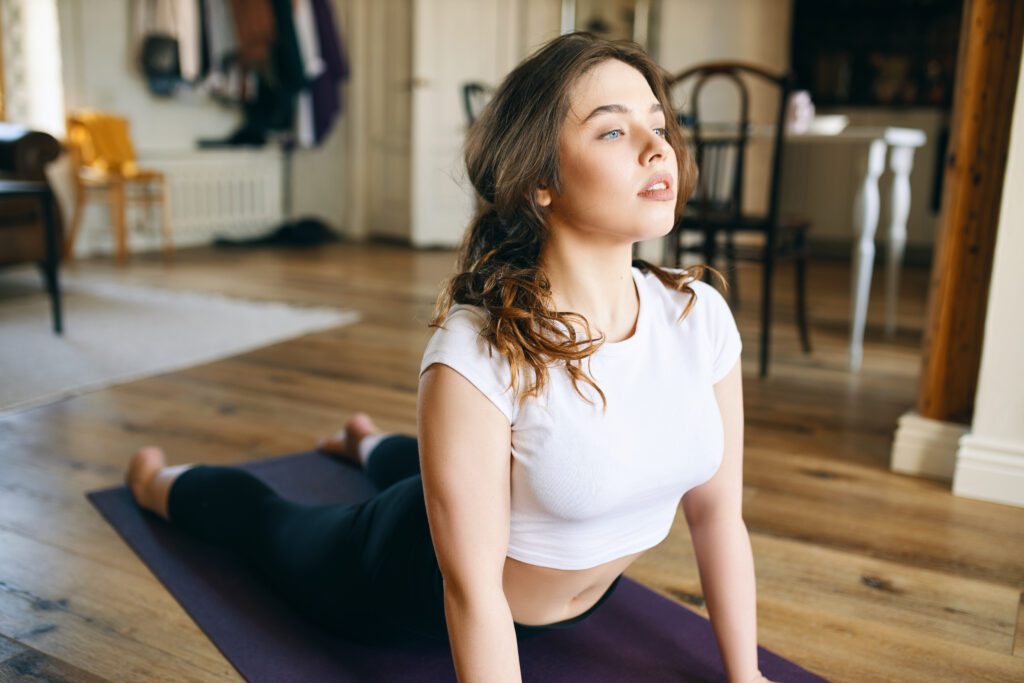
- If your upper back is too rounded (hyperkyphosis), we bring you into a gentle extension posture. (PMC)
Then, while you’re in that Mirror Image position, we use tools and protocols that flood your proprioceptive system with new information. Over time, this can help:
- Create new synaptic pathways (synaptogenesis) in the nerve system. (PubMed)
- Reset how your brain measures “neutral” posture. (Chiropractic BioPhysics)
- Reduce the gap between what looks neutral and what actually is neutral.
In other words, Mirror Image adjusting is posture-specific neurology training, not just joint popping.
How this differs from traditional chiropractic
Traditional chiropractic, especially as it developed in the 1970s and 1980s, put most of the focus on individual joints: where is the restriction, which bone needs to move, what line of drive should I use. That model is still common today and has helped many people, especially for short-term pain relief.
The specificity in traditional joint adjusting lives in:
- The doctor’s contact point
- The line of drive
- The speed and depth of the thrust
- The feel of motion at a single joint
Muscles are usually relaxed. We tell you to “take a breath, wiggle your toes, go to your happy place” so we can get past muscle guarding and move that one joint cleanly.
Mirror Image adjusting in CBP uses a different kind of specificity:
- The specificity is in the posture we put you into.
- We care less about where the equipment sits and more about where your body ends up in space.
- We often want your muscles active, not relaxed, because we’re trying to light up the whole postural control system, not just one joint. (Chiropractic BioPhysics NonProfit)
So instead of, “How do I move this one vertebra?” the question becomes, “How do I place this whole person in the exact opposite of their distortion so their brain gets a new, clear signal?”
Both approaches can have value. But the CBP Mirror Image model is built on more current biomechanics, postural modelling, and outcome research than the older segment-only model. (Chiropractic BioPhysics NonProfit)
The role of the drop table: “My brain thinks I’m falling”
One of the main tools we use for Mirror Image adjusting is the drop table.
Here’s what’s actually happening when you feel a piece of the table drop an inch under you:
- We first position your body into its Mirror Image – for example, shifting your pelvis, rotating your ribcage, extending your head and neck.
- We tension the table section under the area we want to work on.
- When that piece drops, your body falls a very small distance – but your nervous system doesn’t measure inches, it measures change.
For a brief moment, your brain thinks, “I’m falling.” That triggers a burst of proprioceptive and vestibular activity: your systems for balance, posture, and joint awareness all fire at once to figure out where you are in space. (American Chiropractor Archive)
Because you’re already held in a corrective posture, that flood of sensory information is tied to a healthier alignment. Repeating this over time is one way we try to “rewrite the map” your brain uses to control your posture.
From the outside it looks like a small drop. Inside, a lot is happening.
Hand-held instruments: Why we use high-tech “tappers”
We also use hand-held adjusting instruments as part of Mirror Image adjusting. Not all instruments are equal here.
Neuro-mechanical instruments such as Impulse® and Impulse IQ® are designed to:
- Deliver a controlled, high-frequency mechanical stimulus
- Adjust force output based on real-time feedback from how the tissue responds
- Operate at frequencies known to strongly stimulate mechanoreceptors (the sensors in your joints and soft tissues) (PMC)
In simple terms, we explain it to patients like this:
“This instrument has a computer inside it. As it taps, it’s measuring both the force it’s putting out and how much resistance your body is giving back. It speeds up or slows down based on that feedback until your joint starts to move the way it should, then it turns itself off.”
When we use these instruments in a Mirror Image setup, we aim them at areas of highest proprioceptive density:
- Ankles, knees, and hips
- Shoulders
- Key spinal regions such as the thoracolumbar junction
If your ribcage is shifted to one side, we’ll translate it into its Mirror Image and stimulate along the part of the spine where that shift lives. If your pelvis is shifted, we’ll work at the levels that drive that translation.
Again, the priority is not “hit every spot.” It’s “fire the right receptors while you’re in the right corrective posture.”
Mirror image exercises: You become your own adjuster
Mirror Image exercises are a core part of CBP care. Research on CBP protocols describes these exercises as a way to stretch shortened soft tissues and strengthen postural muscles in Mirror Image directions. (ResearchGate)
Here’s what makes them different from general stretching or gym work:
- They are based on your specific postural measurements (from digital posture analysis and X-rays). (Chiropractic BioPhysics)
- They are full-spine and three-dimensional, often combining translation and rotation.
- They are isometric or slow-controlled, not random swinging.
- They are designed to push gently but firmly into your Mirror Image – the opposite of your distortion.
In our practice, we usually keep things simple for you: we might say, “Today you’re going to focus on two main exercises,” even though each one may have several steps integrated into it. That keeps the experience manageable, while still giving your nervous system high-quality input.
When we monitor or “coach” your exercises on the floor, that is Mirror Image adjusting too. We refine your posture, cue the right muscles to activate, and often add instrument input while you hold the corrective position.
Whole-body vibration: Adding more input to the system
Whenever possible, we place Mirror Image exercises and sometimes Mirror Image postures on a high-quality vibration platform.
Not all vibration platforms work the same way. Power Plate® devices, for example, move in three planes at once – up/down, side-to-side, and front/back – which better matches the way your joints and spine experience forces in real life. (PMC)
Why use vibration at all?
- It increases proprioceptive input from muscles and joints.
- It can enhance muscle activation and postural control.
- It “amplifies” the corrective positions you’re already in. (Frontiers)
Think of it as turning up the volume on the signal your sixth sense sends to your brain.
Home spinal orthotics (traction): Locking in the change
In CBP, home traction is not a random gadget; it’s a prescribed spinal orthotic that mirrors your in-office corrective setup. Clinical descriptions of CBP care refer to Mirror Image traction and sagittal curve traction as key pieces for changing the resting length of spinal ligaments and discs. (Chiropractic BioPhysics NonProfit)
At our centre, your supine (lying on your back) Mirror Image adjustment on the table is designed to feel very similar to your home traction position. That way:
- Your nervous system recognizes the setup when you do it at home.
- You’re more confident placing the blocks or orthotics yourself.
- When we later ask, “Show me how you set yourself up,” we can quickly correct any small errors.
Over time, sustained Mirror Image traction can help:
- Deform shortened ligaments and fascia (visco-elastic creep)
- Allow the spine to rest in a more neutral alignment
- Support the proprioceptive retraining from your in-office work (Chiropractic BioPhysics NonProfit)
It’s not glamorous, and it requires consistency. But if you want real structural change, home orthotics are one of the most powerful tools you can use.
Why do we talk to you so much during adjustments
If you’ve noticed that we talk a lot during Mirror Image adjusting – explaining what we’re doing while we do it – that’s on purpose.
Most people have never heard of proprioception. They don’t know:
- Why we’re tapping on their ankles when they came in for neck pain
- Why their eyes are closed while we check posture
- Why we ask them to tighten certain muscles during an adjustment
- Why they might feel slightly “off balance” when they first stand up after a strong Mirror Image session
So we take the time to explain things in plain language:
- “Remember how you can touch your nose with your eyes closed? That’s your sixth sense – proprioception. We’re training that sense right now.”
- “Areas with lots of motion – like your ankles, hips, and spine – have more nerve receptors. That’s why I’m stimulating those while you’re in this corrective position.”
- “When you stand up, you might feel a bit strange for a moment, like your balance is recalibrating. That’s not a problem; that’s your brain trying to figure out your new position in space.”
Framing it this way turns a potentially worrying feeling (“I feel off”) into evidence that something important is happening (“That must have been a good Mirror Image adjustment”).
How often does posture really change?
A common question is, “Do you need to check posture every single visit?”
We always keep an eye on posture, but we don’t expect it to swing wildly from day to day. Because of synaptic plasticity – the way neural pathways become set over time – postural patterns tend to stay the same unless there is either:
- A strong corrective input (like a focused CBP program), or
- A new injury or major event. (PubMed)
That’s why we plan Mirror Image adjusting, exercises, and traction over a series of visits. In our clinic, we map out detailed protocols (often 18 visits at a time or more) based on your initial assessment. That way, every clinician in the office can deliver the same, specific corrective work without having to “re-invent the plan” at each appointment.
Your posture is not random. It’s the product of thousands of repetitions. Our job is to give your body thousands of healthier repetitions – in a structured, evidence-informed way.
The evidence behind CBP and mirror image methods
Chiropractic BioPhysics is one of the more heavily researched chiropractic techniques, especially in the area of posture correction and spinal alignment. CBP Nonprofit and related groups have published and summarized dozens of clinical trials, case series, and biomechanical modelling studies. (Chiropractic BioPhysics NonProfit)
For example:
- CBP literature describes Mirror Image adjusting, Mirror Image exercises, and Mirror Image traction as core methods designed to change posture and spinal curves, grounded in linear algebra models of ideal alignment. (Chiropractic BioPhysics NonProfit)
- A case series on thoracic hyperkyphosis (rounded upper back) reported improvements in kyphosis angle and symptoms using Mirror Image thoracic extension exercises and traction. (PMC)
- CBP-based case reports have shown structural and symptom improvements in patients with persistent spine pain and failed back surgery syndrome when standard care had not helped. (PubMed)
On the proprioception side, modern neuroscience continues to confirm that:
- Proprioceptive input is crucial to motor control and postural stability. (Physiology Journals)
- Peripheral proprioceptive deficits can drive maladaptive neuroplastic changes in the brain – the system rewires around bad information. (PubMed)
- Targeted proprioceptive training can improve postural control, stability, and function in many populations with musculoskeletal issues. (Frontiers)
Mirror Image adjusting draws these threads together: structural biomechanics, postural modelling, and modern neuroscience of proprioception and plasticity.
It’s not magic. It’s targeted, repeated, three-dimensional input to a plastic nervous system.
What a patient experience might look like
A typical corrective visit in a CBP-based Mirror Image program might include:
- Brief progress check
How are you feeling? Any changes in pain, function, or daily activities? We may do a quick visual posture check or re-test a key movement. - Mirror Image exercises
You perform one or two tailored exercises that together address your whole spine. We coach your form, cue the right muscles, and often add instrument input while you hold the corrective positions. - Mirror Image adjusting on the drop table
We position your pelvis, ribcage, and head into their Mirror Image alignments. We ask you to gently activate the muscles that push you further into correction. Then we use drop pieces and/or instruments to deliver bursts of proprioceptive input. - Supine Mirror Image setup
You lie on your back in a position that matches your home traction. We may add gentle drops or instrument work, especially in directions that we don’t want to drop standing (for example, not dropping your head forward when we’re trying to train it back). - Review and reminders
We remind you what to expect after care – sometimes mild soreness, sometimes a feeling of being “re-organized” or slightly off balance for a short time – and how to support the process with hydration, movement, and your home program.
Over a full corrective phase, we reassess posture and X-rays at planned intervals to measure structural change, not just symptom change. (Chiropractic BioPhysics)
Why this matters for longevity
At 100+Living, our mission is not only to get you out of pain. It’s to help you live long, strong, and vibrant – to build “blue zones” right here in our community by focusing on spinal and neurological health, recovery, and prevention.
From that perspective, Mirror Image adjusting and CBP-style correction are about more than posture pictures:
- Better alignment can reduce abnormal loading on discs and joints.
- Improved proprioception can support balance and reduce fall risk as you age. (MDPI)
- Clearer brain-body communication can support movement quality, exercise, and overall vitality.
We can’t guarantee specific results for every individual, and CBP care is not a replacement for medical evaluation where needed. But for many people, especially those with long-standing postural issues, Mirror Image adjusting offers a structured, research-informed path to change the underlying mechanics – not just chase pain from week to week. (Chiropractic BioPhysics NonProfit)
Next Steps: Explore whither mirror image adjusting is right for you
If you’re dealing with:
- Chronic back or neck pain
- Forward head posture
- Rounded upper back (hyperkyphosis)
- Scoliosis or postural imbalances
- Or you simply want your spine to support you well into your 80s, 90s, and beyond
…then a detailed CBP assessment and Mirror Image-based corrective plan may be a strong option for you.
At our Kelowna 100+Living Health Center, we combine Advanced Certified CBP care, state-of-the-art adjusting technology, and a full longevity framework to help you move toward your best possible health span.
Book at our Kelowna 100+Living Health Center to find out whether Mirror Image adjusting and CBP structural correction are a good fit for your goals.
Disclaimer
This content is for educational purposes only and does not replace professional medical advice. Always consult a qualified healthcare provider before making changes to your health plan.
References
Chiropractic BioPhysics / CBP and Mirror Image methods
- Harrison DD. Clinical Biomechanics of Posture — Chapter 1: Evidence for CBP Clinical Practice. CBP Nonprofit. (Chiropractic BioPhysics NonProfit)
- Harrison DD, et al. Chiropractic Biophysics (CBP) Mirror Image Posture Adjusting. The American Chiropractor. 2005. (American Chiropractor Archive)
- Oakley PA, et al. The CBP® Mirror Image® approach to reducing thoracic hyperkyphosis: a case series of 10 patients. J Phys Ther Sci. 2018. (PMC)
- Haas JW, et al. The Subjective and Objective Improvement Using Chiropractic BioPhysics® Technique in Persistent Spine Pain Syndrome: A Case Report. 2023. (PubMed)
- IdealSpine. What is CBP® – Chiropractic BioPhysics. (Chiropractic BioPhysics)
- IdealSpine Health Center. What is Mirror Image Adjustment? (Ideal Spine Health Center)
- CBP Nonprofit / IdealSpine. CBP® Mirror Image® Adjusting Table and Drop Table Adjusting resources. (Chiropractic BioPhysics)
Proprioception, sixth sense, and neuroplasticity
- Proske U, Gandevia SC. The proprioceptive senses: their roles in signaling body shape, body position and movement, and muscle force. Physiol Rev. 2012. (Physiology Journals)
- Tuthill JC, Azim E. Proprioception. Curr Biol. 2018. (ScienceDirect)
- Shitara H, et al. Neuroplasticity Caused by Peripheral Proprioceptive Deficits. Med Sci Sports Exerc. 2022;54(1):28–37. (PubMed)
- Mukhopadhyay K. Proprioception and Kinesthesia: The Sixth Sense Organ. Adv Health Exerc. 2021. (turkishkinesiology.com)
- Winter L, et al. The Effectiveness of Proprioceptive Training for Improving Motor Function: A Systematic Review. Front Rehabil Sci. 2022. (Frontiers)
- Mollova K, et al. Effectiveness of Proprioceptive Training on Postural Control and Spinal Stability. Sports. 2025. (MDPI)
CBP protocols, exercises, and traction
- Chiropractic BioPhysics® (CBP®). Posture Correction and CBP overview. (مركز الدقة للعمود الفقري)
- ResearchGate. Chiropractic BioPhysics Technique mirror-image exercises description. (ResearchGate)
General posture and proprioception
- Physio-Pedia. Proprioception – definition and clinical relevance. (Physiopedia)
- Guardian. The power of proprioception: how to improve your ‘sixth sense’. 2024. (The Guardian