Most people living with an anterolisthesis at L4 or L5 are unknowingly doing exercises that slowly make the problem worse. When the spine slips forward, it becomes vulnerable to movements that increase shear forces, and many of the common stretches or core workouts people attempt can actually aggravate the instability. If you have an anterolisthesis and have been dealing with persistent back pain, leg pain, or tightness that never seems to fully improve, this article will help you understand what is really going on and what you can do differently starting today.
In my Kelowna practice, I have worked with hundreds of patients who were frustrated, scared to move, or confused about which exercises were safe. They had been told to stretch more, strengthen their core, or simply wait it out, but none of those approaches addressed the real issue. Stability, not stretching, is the key to healing an anterolisthesis. When you stabilize the hips, pelvis, deep core, and postural system, the lower back becomes better supported and the irritation around the slipped vertebra begins to settle down.
In this article, I will explain why anterolisthesis develops, what causes the recurring pain, and the five safest and most effective exercises you can begin using right away to reduce symptoms and build long term stability. These are the same exercises we use inside 100+Living Health Centres here in Kelowna, BC to help people walk, sit, garden, and work again without fear. I will also explain how corrective chiropractic care supports these exercises and helps patients achieve longer lasting results. Near the end, I will share the three common movements that secretly worsen anterolisthesis even though many trainers and therapists still recommend them.
My goal is to give you clarity, confidence, and a clear path forward. If you live in Kelowna, BC and you are looking for a conservative, evidence based approach to anterolisthesis, this guide will show you how strengthening and correcting your spine can help you feel better, move safely, and restore long term stability.
Why This Problem Happens
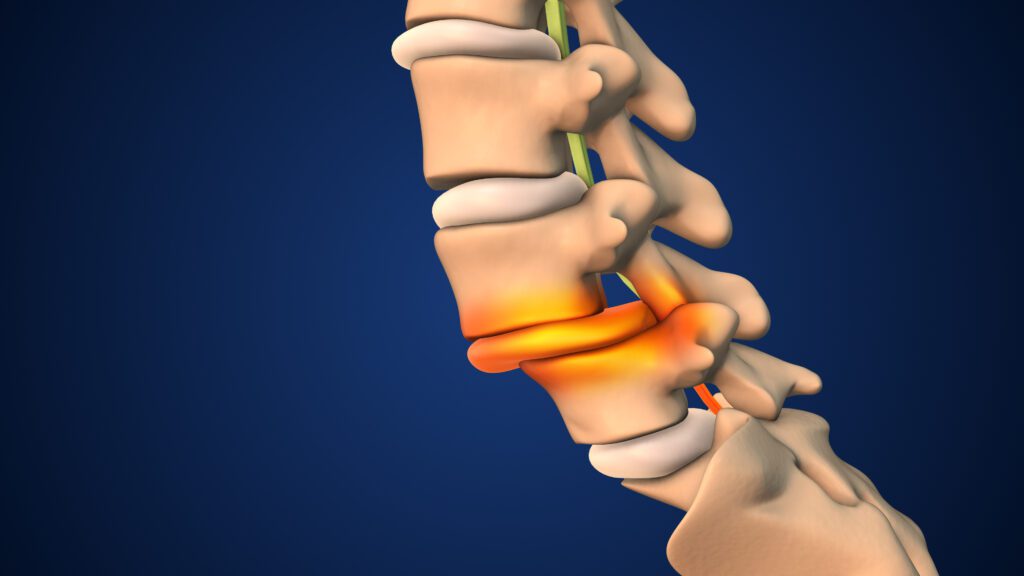
Anterolisthesis at L4 or L5 occurs when one vertebra slips forward relative to the one below it. This forward shift changes how the joints, discs, ligaments, and nerves experience load. Instead of sharing pressure evenly, the slipped vertebra creates shear forces that stress the spine with almost every movement. These forces are especially aggravated when the lower back extends or arches. For many people, this happens during daily activities without them realizing it.
Patients in Kelowna who come into my clinic often describe the same experience. They bent forward to garden, lifted something heavy, completed an intense workout, or started a new stretching routine, and suddenly their back or leg pain worsened. The problem is not the activity itself. The problem is that the underlying instability caused by the anterolisthesis was never addressed. When the spine is already unstable, the surrounding muscles work overtime trying to protect it. This leads to fatigue, stiffness, inflammation, and nerve irritation.
The L4 and L5 levels are common sites for anterolisthesis because they bear much of the body’s weight and are responsible for both stability and movement. When posture shifts, the pelvis tilts too far forward, the abdominal muscles weaken, or the deep stabilizing system shuts down due to pain, the spine loses its normal support. Over time, this makes the vertebra more likely to slip.
People with anterolisthesis often feel trapped between fear and confusion. They want to get stronger, but they are afraid of doing the wrong thing. They want to stretch tight muscles, but stretching often makes things worse. They want to exercise, but they do not know which movements are safe. That is why clear guidance matters. With reliable information and a structured plan, the spine can become more stable and predictable, and physical activity becomes safe again.
5 Key Exercises for Anterolisthesis
In the video below I demonstrate how to do these 5 exercises safely.
Exercise 1. Finding Neutral
The first step in stabilizing an anterolisthesis at L4 or L5 is learning how to find neutral spine. Neutral is the position where the spine is safest. In my Kelowna clinic, we teach this using a simple pelvic tilt exercise. By gently rocking the pelvis forward and backward while lying on your back, you begin to feel the difference between too much arching, too much flattening, and the safe midpoint where the lower back rests comfortably.
When you find neutral, the spine feels supported rather than strained. This is the foundation for every exercise that follows because moving through daily life with a supported spine reduces pain and prevents further irritation. Most patients are surprised by how quickly their body responds once they learn this position. They feel calmer, more stable, and more confident as they begin strengthening their core and hips from a safe starting point.
During this exercise, you may feel gentle activation in the lower abdominals and pelvic muscles. That is exactly what we want. The stabilizers are waking up again. Practicing pelvic tilts every day helps retrain your nervous system so that your spine naturally settles into a safer position during walking, lifting, and bending.
Exercise 2. Strengthening the Support System
The second step focuses on strengthening the glutes and hips. These muscles form the support system beneath the lower back. When they are weak, the spine absorbs forces it was never designed to handle. To protect a slipped vertebra, the glutes must be strong enough to keep the pelvis stable during movement. That is why the glute bridge is one of the most effective and safest exercises for anterolisthesis.
The glute bridge helps you activate the large muscles of the hips while keeping the spine neutral. Your back stays supported as you lift your hips from the floor. This reduces strain on L4 and L5 and teaches the body to generate power from the hips instead of the lower back. In my experience working with patients in Kelowna, many people discover during this exercise that one side of their glutes is weaker than the other. Strengthening both sides evenly is essential for balancing pelvic alignment and preventing the vertebra from being pulled further forward.
As you repeat the glute bridge over time, you will notice that walking becomes easier, sitting feels more comfortable, and transitions such as standing up from a chair place less strain on the lower back. This is one of the first exercises my patients report feeling truly safe with, and it builds the confidence they need to continue strengthening.
Exercise 3. Activating the Deep Core
The third step involves waking up the deep core muscles that stabilize the spine. The deep core is different from the muscles used in traditional sit ups or leg lifts. These stabilizers work gently beneath the surface, supporting the vertebrae and preventing the excessive movement that aggravates anterolisthesis. When they activate correctly, the lower back feels lighter, more supported, and more secure.
To activate these muscles, we begin with bent knee figure eight movements. These are small, controlled motions that glide the hips and lower back in tiny patterns while maintaining a stable core. Later, the movements progress to straight leg infinity patterns. The goal is not to stretch or strain anything. The goal is gentle motion with precise control. Many patients describe this step as the moment they begin to understand what true core stability feels like.
This activation sequence teaches the body how to control micro movements that protect the spine during daily activities such as reaching, twisting, or stepping off a curb. For someone with anterolisthesis, that ability can be life changing because it reduces the unpredictable jolts of pain that come from sudden or awkward movements. Over time, this deeper control provides the steady foundation the spine needs in order to heal.
Exercise 4. Controlled Mobility
The fourth step introduces controlled mobility using a modified cat to neutral movement. Traditional cat camel exercises can place the spine into excessive extension, which is not ideal for someone with anterolisthesis at L4 or L5. That is why we modify it. The movement becomes more focused, safer, and entirely within a protective range.
This exercise helps maintain healthy motion between the vertebrae without letting the spine slip deeper into extension. It reduces stiffness, eases tension around irritated joints, and improves circulation through the muscles surrounding the spine. Patients often feel immediate relief as the spine begins to move fluidly again without pain. The key is slow, controlled motion back to neutral every time. You never drop into a deep arch. Instead, you guide the spine through a safe arc and return to the stable midpoint.
Controlled mobility helps restore confidence. Many people with anterolisthesis become afraid to move because they do not trust their spine. This exercise gently reintroduces motion in a way that feels predictable and safe. As their confidence grows, their movement patterns normalize, and their overall function improves.
Exercise 5. Integrated Stability
The fifth step brings everything together through integrated stability. We use a modified plank that is slightly tented rather than flat. This position distributes forces more evenly across the core, hips, and shoulders, giving the spine a stable chain of support. This modified plank is one of the most effective full body stability drills for people with a slipped vertebra because it keeps the spine neutral while teaching the entire body to work together.
In my Kelowna practice, this exercise is often a turning point for patients. Their spine feels more supported, their core feels more responsive, and their hips begin contributing more effectively to movement. Integrated stability is critical for long term success because it translates directly into real life tasks such as lifting groceries, carrying children, working in the garden, walking uphill, or performing household chores.
As you practice this plank, you will begin to feel more coordinated, stable, and confident. Movements that once felt risky start to feel natural again. This is the moment when many patients tell me they finally believe they can regain control of their body and return to the activities they love.
Additional Tips or Lifestyle Advice
In my Kelowna clinic, I often explain to patients that stabilizing an anterolisthesis is not only about doing the right exercises but also about avoiding unnecessary stress on the spine throughout the day. Simple habits can make a substantial difference. Learning to hinge at the hips rather than bending through the lower back is one of the most helpful changes. This allows the glutes and hamstrings to support you rather than forcing the spine to absorb the pressure.
Another important habit is keeping prolonged sitting to a minimum. When you sit for long periods, especially in a slouched posture, the pelvis tilts forward or backward excessively, pulling the spine out of neutral. Standing and walking breaks throughout the day help maintain stability and prevent the small joints of the spine from stiffening.
Sleeping posture also matters. Using a pillow between your knees when lying on your side or under your knees when lying on your back helps maintain spinal alignment. Patients often notice that this small adjustment reduces morning stiffness significantly.
Hydration and gentle movement throughout the day support the discs and joints. Drinking enough water and taking brief mobility breaks every hour can improve recovery and keep the spine healthier. None of these lifestyle adjustments require major effort, but together they reduce strain, support healing, and help the exercises work more effectively.
Role of Professional Care
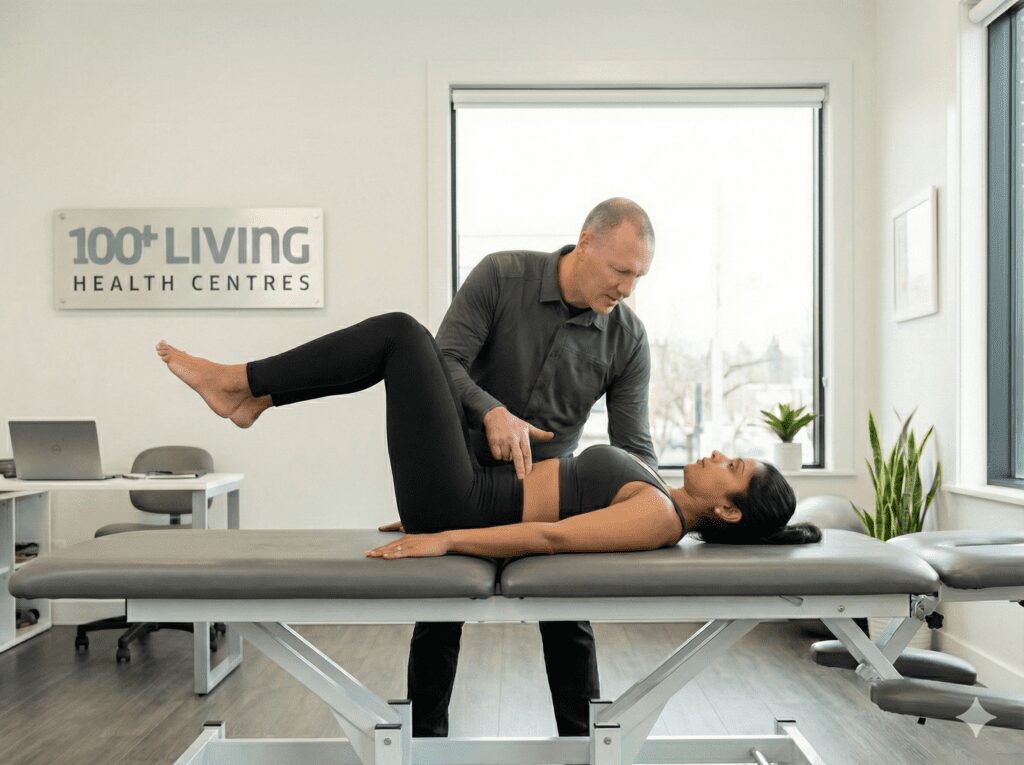
The exercises described above are powerful, but the best results occur when they are combined with corrective chiropractic care. As a corrective care chiropractor in Kelowna, BC, my focus is on understanding why your spine became unstable in the first place. The slipped vertebra is often a result of something else, not the root cause. To correct the underlying instability, we use a system called Chiropractic BioPhysics, or CBP. This is an advanced, evidence based method that analyzes the shape and alignment of the spine in precise detail.
Using imaging, we can see exactly where the spine is misaligned and how the posture or spinal misalignment is contributing to the anterolisthesis. From there, we apply Mirror Image adjustments, traction, and specific protocols designed to restore proper alignment. I am one of just three advanced certified CBP doctors on the West Coast of Canada, and I have seen firsthand how these methods create measurable corrections confirmed on post treatment X rays.
At 100+Living Health Centres in Kelowna, BC, we also use advanced traction systems such as the Robo Track to apply gentle, consistent forces that help reshape the spine over time. For home reinforcement, we provide tools like the Denneroll spinal orthotic so patients can support their progress between visits.
This process is structured into phases. The first phase reduces pain and inflammation. The second phase restores safe movement patterns. The third phase builds long term stability. With anterolisthesis, the goal is not only to feel better but to correct the underlying imbalance that caused the slip in the first place. When the structure is improved, the body moves better, the nerves function more predictably, and the likelihood of future irritation decreases significantly.
When to Seek Help
It is important to know when professional evaluation is necessary. If your pain travels into the leg, if you feel numbness or tingling, or if weakness develops in the foot or ankle, you should seek care promptly. These signs suggest nerve involvement, which requires a careful and measured approach. If back pain persists for more than two weeks despite rest and basic modifications, or if you feel instability when standing or walking, a proper assessment is essential.
People in Kelowna often wait too long to seek help because they assume the pain will go away on its own. While minor strains sometimes improve naturally, anterolisthesis is different. The underlying instability rarely resolves without structured stabilization and corrective work. The earlier you seek assessment, the faster and more effectively your spine can heal.
Nightly and Weekly Action Plan
A simple nightly and weekly routine can help reinforce stability and reduce pain. Each evening, spend a few minutes practicing pelvic tilts and deep core activation drills. These movements calm the nervous system and bring the spine back to neutral. Gentle glute bridges before bed help reduce stiffness that builds up throughout the day. This evening routine prepares your spine for restful sleep and reduces morning pain.
It is helpful to integrate controlled mobility and the modified plank into your weekly schedule. These exercises maintain strength, prevent flare ups, and retrain the body to move safely. If you are involved in corrective care, be consistent with your visits and your home traction or orthotic schedule. Consistency is what allows the spine to adapt and stabilize over time. Patients in Kelowna who follow this structured plan typically notice steady improvements in pain, confidence, and mobility.
Final Thoughts
If you are living with anterolisthesis at L4 or L5, there is a proven, conservative path forward. Stability comes before flexibility, and strengthening the core, hips, and postural system is essential for protecting your spine. These five exercises are a safe and powerful starting point, and when combined with corrective care, they can help you regain control of your body, reduce pain, and restore long term confidence.
You do not have to live in fear of movement. With clear guidance and a structured plan, your spine can become stronger, more stable, and more resilient. If you live in Kelowna, BC and are looking for help with anterolisthesis, my team at 100+Living Health Centres is here to support you. Reach out to schedule an assessment so we can understand your spine, create a personalized plan, and help you move toward lasting correction and relief.
Dr. Graham Jenkins
100+Living Health Centres
Tel: 250-875-2225 (BACK)
Frequently Asked Questions
Q: What is the safest treatment for anterolisthesis in Kelowna, BC?
A: The safest treatment combines stabilization exercises with a corrective chiropractic approach. In my Kelowna clinic, we use Chiropractic BioPhysics to assess the spine, identify misalignments, and apply corrective techniques that reduce stress on the slipped vertebra. This approach helps patients build stability and reduce pain without surgery.
Q: Can a chiropractor help with anterolisthesis?
A: Yes. A corrective care chiropractor trained in alignment based methods can help reduce instability, improve spinal mechanics, and strengthen the supportive structures around the vertebra. In many cases, this approach decreases pain and improves function, especially when combined with targeted stabilization exercises.
Q: Which exercises are safest for anterolisthesis at L4 or L5?
A: The safest exercises avoid extension and focus on stability. These include pelvic tilts, glute bridges, deep core activation drills, modified cat to neutral movements, and a tented plank. These exercises help support the spine while avoiding shear forces that could worsen the slip.
Q: What activities should I avoid with anterolisthesis?
A: Avoid deadlifts, supermans, and extension based yoga movements such as cobra or up dog. These movements increase extension forces on the spine and can aggravate the instability. Patients in Kelowna who avoid these activities while strengthening the core often see faster improvement.
Q: Do I need imaging for anterolisthesis treatment in Kelowna, BC?
A:Xray imaging is extremely helpful. It allows us to see and measure the degree of the slip, understand alignment issues, and design a precise corrective plan. At 100+Living Health Centres, we use imaging to monitor progress and confirm improvements throughout care.
Q: How long does it take to see improvement with anterolisthesis exercises?
A: Many patients notice early improvements within weeks, especially when they practice the exercises consistently. Corrective care combined with stabilization creates deeper, longer lasting improvements over several months as alignment and support systems improve.
If you are ready to begin strengthening your spine safely and want expert help in Kelowna, BC, contact 100+Living Health Centres to schedule your comprehensive assessment. You do not have to navigate anterolisthesis alone. We are here to help you move confidently toward long term correction and relief.