How Your Smartphone Could Be Shortening Your Life (2026 Update)
In 2014 several news outlets reported a surprising idea: texting could shorten your life expectancy.
At first glance that sounds dramatic. Most people assume the concern is distracted driving. And yes, texting while driving is extremely dangerous.
But that wasn’t the focus of the research.
The real issue was something millions of people do every day without thinking.
Posture.
Specifically, the posture your neck assumes when you spend hours looking down at your phone — a condition now widely known as text neck.
Over the past decade, smartphone usage has exploded. The average person now checks their phone more than 200 times per day, and many people spend five to ten hours daily looking at screens.
What seems like a harmless habit is quietly creating one of the most widespread spinal health problems of the modern era: forward head posture.
In this article we will explore the health risks of text neck, how forward head posture affects spinal health, and practical strategies for posture correction that can protect your long-term health.
What Is Text Neck?
Text neck describes the strain placed on the cervical spine when the head tilts forward while looking at a phone or mobile device.

When your head sits in a neutral position over your shoulders, it weighs about 10–12 pounds.
But when the head tilts forward, the stress on the neck increases dramatically.
Research published in Surgical Technology International found that tilting the head forward while texting can increase the load on the cervical spine to as much as 60 pounds of pressure.
You can view the research here:
https://pubmed.ncbi.nlm.nih.gov/25393825/
This means the muscles, joints, and discs in your neck may be carrying five to six times the normal load when you look down at your phone.
Now imagine that pressure repeated thousands of times every day.
Over months and years, this stress changes the structure of the spine itself.
Forward Head Posture: The Hidden Epidemic of the Digital Age
One of the most common structural changes linked to modern technology use is forward head posture.

Forward head posture occurs when the head shifts forward relative to the shoulders.
Even a one-inch shift forward can significantly increase stress on the cervical spine.
Common symptoms associated with forward head posture include:
- chronic neck pain
- headaches
- shoulder stiffness
- reduced neck mobility
- tingling or numbness in the arms
- fatigue
- decreased concentration
But the effects of poor posture go far beyond neck pain.
Forward head posture can influence the lungs, heart, nervous system, and even life expectancy.
Poor Posture and Life Expectancy
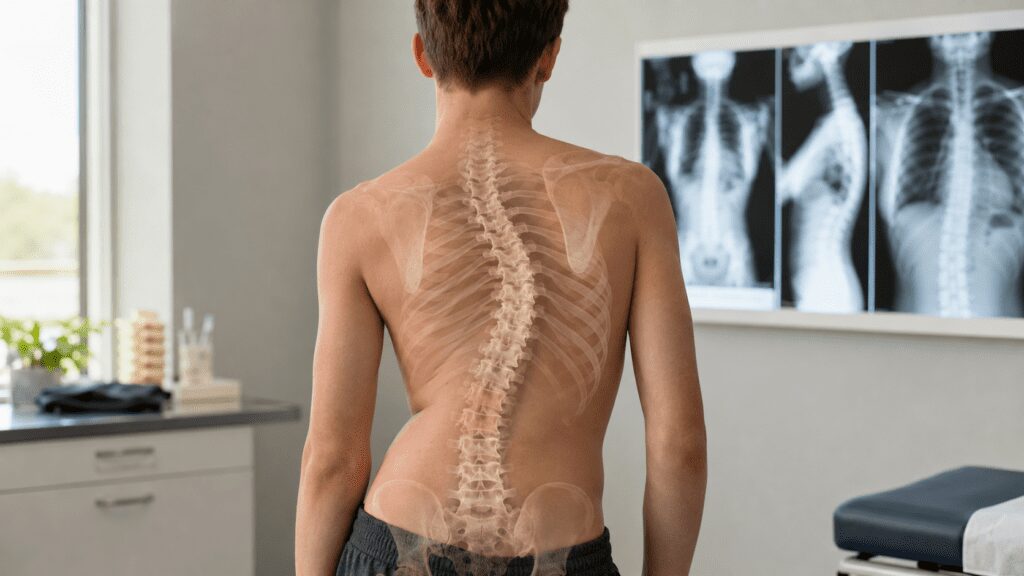
One of the most fascinating areas of research on posture involves hyperkyphosis, an exaggerated forward curve of the upper spine.
Research published in the Journal of the American Geriatrics Society found that severe hyperkyphosis was associated with a significantly higher risk of mortality in older women.
You can read the research summary here:
https://pubmed.ncbi.nlm.nih.gov/15450042/
In this study, women with significant forward spinal curvature had dramatically higher mortality rates than those with normal spinal alignment.
A related review published in the Annals of Internal Medicine further explored the health risks associated with hyperkyphosis.
Full study:
https://www.acpjournals.org/doi/10.7326/0003-4819-147-5-200709040-00008
While posture alone does not determine lifespan, spinal alignment clearly plays an important role in overall health.
How Poor Posture Affects Lung Function
Posture has a powerful influence on breathing.
When the shoulders roll forward and the spine collapses, the rib cage compresses and the diaphragm cannot move properly.
Research suggests that poor posture can reduce lung capacity by up to 30 percent.
Reduced lung capacity means less oxygen reaching your brain, muscles, and organs.
This can contribute to:
- fatigue
- reduced physical endurance
- slower recovery from stress
- decreased cognitive performance
Athletes often notice improvements in breathing and endurance when posture improves.
But this benefit applies to everyone.
Poor Posture and Heart Health
Forward head posture and spinal collapse also affect circulation.
When the chest cavity becomes compressed, it places additional stress on the cardiovascular system.
Studies exploring posture and cardiovascular health suggest that poor spinal alignment can contribute to:
- increased stress hormone levels
- reduced oxygen efficiency
- decreased physical activity tolerance
- systemic inflammation
These factors are known contributors to cardiovascular disease.
Posture and the Nervous System
Your spine protects the spinal cord, the central communication pathway between your brain and body.
When spinal alignment changes, tension can develop in the spinal cord and surrounding tissues.
This may affect nerve signaling throughout the body.
Elevated tension in the nervous system can influence:
- digestion
- immune function
- sleep quality
- hormone balance
- stress response
Posture therefore plays a role not just in structural health but in neurological health as well.
Why Most People Underestimate the Health Effects of Poor Posture
When I ask clients about posture, almost everyone agrees that poor posture probably causes problems over time.
But what most people don’t realize is how significant those problems can become.
Postural changes happen slowly.
They develop through thousands of daily habits:
- looking down at phones
- working on laptops
- sitting for long hours
- driving
- scrolling social media
- slouching on couches
Over time the body adapts.
Muscles tighten.
Ligaments stretch.
Discs compress.
Spinal curves change.
Once these structural changes occur, simply trying to “sit up straight” does not fix the problem.
Why Posture Correction Matters
Correcting posture is not about looking better.

It’s about how well your body functions.
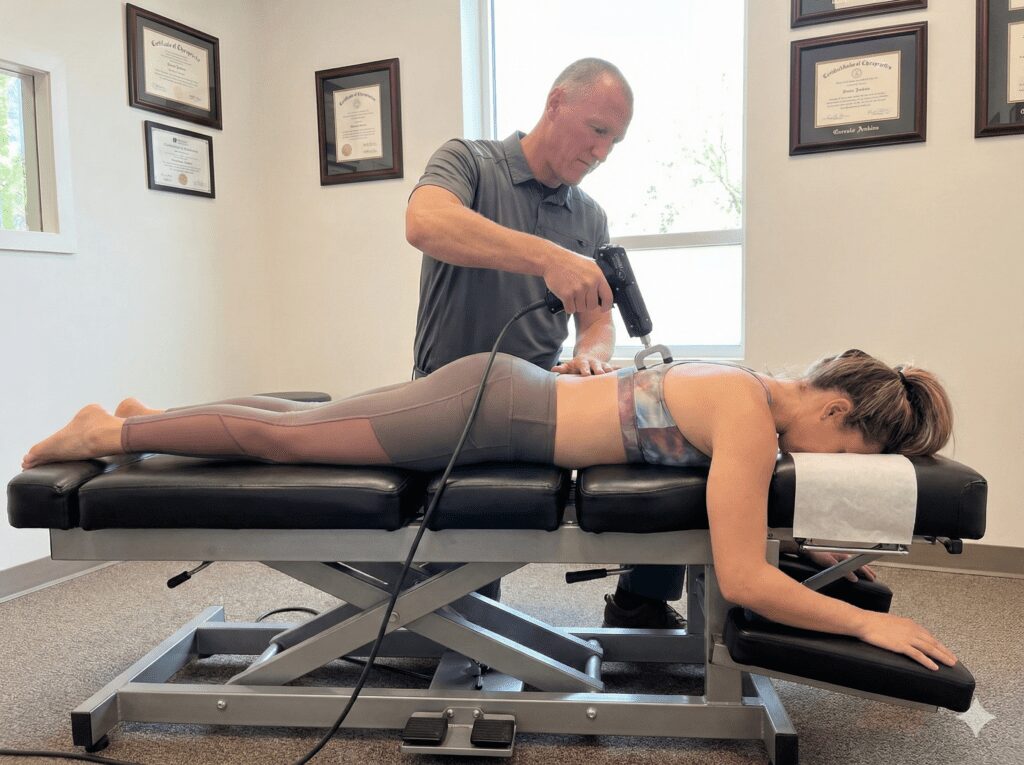
Chiropractors who specialize in posture correction and spinal health focus on restoring proper spinal alignment.
One evidence-based method used by many structural chiropractors is Chiropractic BioPhysics (CBP).
Corrective approaches may include:
- posture analysis
- weight-bearing spinal X-rays
- mirror-image adjustments
- spinal traction
- corrective exercises
The goal is to restore proper spinal curves so the nervous system can function more efficiently.
Why Photos Alone Are Not Enough
Many posture apps rely on photos to evaluate posture.
Photos can be helpful, but they don’t tell the full story.
A proper structural assessment requires weight-bearing X-rays.
This allows chiropractors to see how the spine behaves under load while standing.
The body is very good at compensating for structural problems.
It is possible for someone to appear to have decent posture in a photograph while their spinal X-rays reveal significant structural changes.
How to Fix Bad Posture in the Smartphone Era
The good news is there are practical steps you can take to reduce the risks of text neck and forward head posture.
Raise your phone to eye level whenever possible.
Take posture breaks every 20–30 minutes when using screens.
Strengthen the muscles of the upper back and neck that support healthy posture.
Limit long periods of continuous screen use.
And most importantly, have your spine evaluated by a chiropractor who specializes in posture correction.
Early correction is far easier than reversing years of structural change.
Posture May Not Be Trendy But It Is Essential for Long-Term Health
Posture rarely makes headlines.
It isn’t emotional like cancer campaigns.
It isn’t viral like social media challenges.
But posture is one of the most important indicators of long-term health.
Ask almost any health professional and they will tell you the same thing:
Posture matters.
If a pharmaceutical company discovered a pill that could:
- improve lung function
- reduce cardiovascular risk
- support nervous system balance
- improve energy
- enhance physical performance
You would hear about it everywhere.
Yet posture correction, which influences all of these systems, rarely receives the attention it deserves.
Concerned About Text Neck?
If you spend several hours a day on a smartphone, tablet, or computer, it may be worth having your posture evaluated.
Corrective chiropractic care focuses on identifying structural changes before they lead to more serious health problems.
If you are looking for a chiropractor who specializes in posture correction and spinal health, our team at 100+Living Health Centers in Kelowna would be happy to help.
Because when it comes to spinal health, prevention is always easier than repair.
Take the Next Step
Don’t settle for temporary relief. Get care that helps correct the cause of your condition.
Step 1:
Start with a free 10-minute phone consult to discuss your symptoms and see if our approach is right for you.
Step 2:
Book your first comprehensive exam and consultation and get started.
References
Hansraj KK. Assessment of stresses in the cervical spine caused by posture and position of the head. Surgical Technology International.
https://pubmed.ncbi.nlm.nih.gov/25393825/
Kado DM et al. Hyperkyphotic posture predicts mortality in older community-dwelling women. Journal of the American Geriatrics Society.
https://pubmed.ncbi.nlm.nih.gov/15450042/
Kado DM et al. Hyperkyphosis in older persons. Annals of Internal Medicine.
https://www.acpjournals.org/doi/10.7326/0003-4819-147-5-200709040-00008
Adams KF et al. Overweight, obesity, and mortality in a large prospective cohort of persons aged 50–71 years. New England Journal of Medicine.
https://www.nejm.org/doi/full/10.1056/NEJMoa055643
American Posture Institute. Forward head posture research review.
https://www.americanpostureinstitute.com/
National Library of Medicine research database.
https://pubmed.ncbi.nlm.nih.gov/