The Prediction That Matters More Than Life Expectancy
Back in 2014 there was a lot of excitement around life expectancy in Canada. The numbers looked great. We were living longer than ever, ranking near the top globally for both men and women. It felt like progress, and in many ways it was.
But there’s always a nuance to these kinds of headlines.
Predictions can be comforting when they tell a positive story, but they can also distract us from what’s actually happening on the ground.
And if you’ve been in healthcare long enough, you start to notice that not all predictions carry the same weight.
Some are based on broad global data. Others come from closer to home, where the realities are harder to ignore.
Several years ago, a Canadian study raised concerns about declining life expectancy in future generations if we didn’t address childhood obesity and inactivity. That was a prediction too. Not guaranteed, but grounded in observable trends.
That one got my attention more than the global reports ever did.
Because it reflected what many of us were already seeing in practice.
Kids moving less. Sitting more. Spending hours on devices. And slowly, quietly, their posture changing.
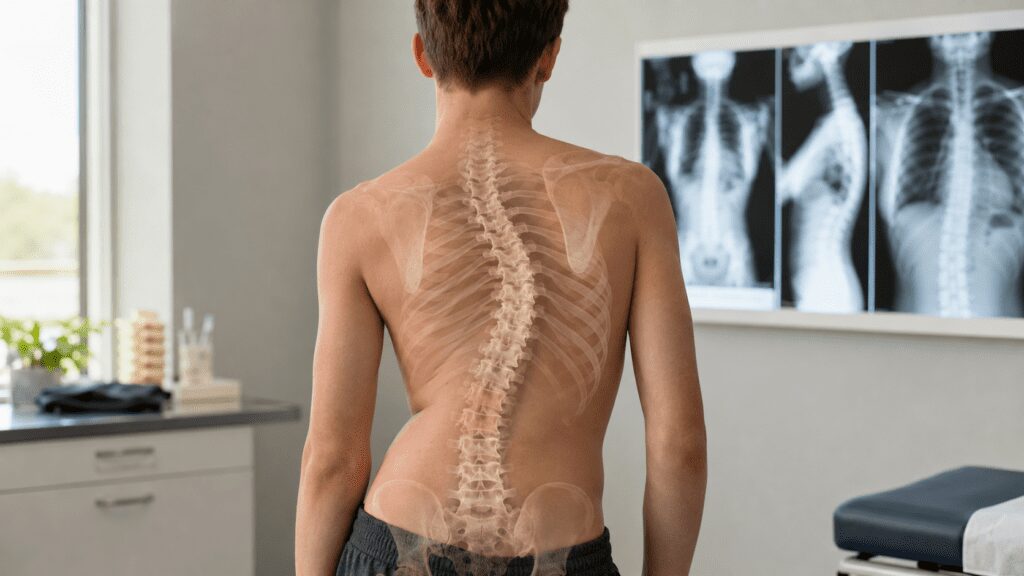
Not dramatically at first. Just enough that you might notice a rounded shoulder here, a forward head position there. Nothing alarming… until you realize those small changes don’t stay small.
They compound.
The Conversation We’re Not Having Enough
We’ve done a good job in recent years raising awareness about physical activity.
Programs like ParticipACTION have helped shift the conversation around screen time and movement, which is encouraging.
But there’s another piece of the puzzle that often gets overlooked.
Posture.
Not the superficial kind where someone reminds you to “sit up straight,” but structural posture, the alignment of the spine and how it affects the nervous system.
Because when posture breaks down, it’s not just about appearance.
It’s about function.
And that’s where things start to matter more than most people realize.
What the Research Is Actually Telling Us
There are well over a thousand studies in the National Library of Medicine looking at posture, spinal alignment, and health outcomes.
That’s not a fringe idea. That’s a substantial body of research.
And while the language in those studies can be technical, the conclusion is surprisingly straightforward.
Poor posture is associated with poorer health outcomes over time.
You don’t need a medical degree to understand that.
Ask almost anyone a simple question:
Do people with strong, balanced posture tend to look healthier… or less healthy?
Most people will answer that instinctively.
They already know.
What they don’t always realize is how early those changes begin, and how long they can go unaddressed.
The Reality of Growing Up in 2026
Think about the daily habits of a typical child or teenager today.
Hours on a phone.
Schoolwork on a laptop.
Gaming.
Streaming.
Texting.
Even when they’re active, there are other stressors. Heavy backpacks. Repetitive sports movements. Long periods of sitting between activities.
It all adds up.
And it’s not just “inactive” kids who are at risk.
In fact, high-level young athletes often develop postural imbalances even faster because of the repetitive nature of their training.
The body adapts to whatever it does most often.
If that adaptation is unbalanced, it shows up in posture.
Why Posture Is Really About the Nervous System
This is the part that often gets missed.
Posture isn’t just about muscles and bones.
It’s about the nervous system.
Your spine protects the spinal cord, which is the main communication pathway between your brain and your body. When the structure of the spine changes, even subtly, it can affect how that system functions.
There was a study out of Japan that looked at changes in brain activity and stress responses following chiropractic care to the neck.
What they found was interesting.
After correcting spinal function, there was a measurable reduction in stress-related activity in the brain.
That doesn’t just matter for pain.
It matters for how the body adapts to stress, how it regulates itself, and how it maintains overall health.
And if you think about what kids today are dealing with; academic pressure, social pressure, digital overload… that matters more than ever.
The Problem With Waiting
One of the most common things I hear from parents is something along the lines of:
“They’re fine right now.”
And that’s often true.
Kids are incredibly adaptable. They can compensate for a lot.
But compensation isn’t the same as optimal function.
And the issue with posture is that it doesn’t usually create immediate problems.
It creates gradual ones.
What starts as a small imbalance can turn into chronic tension, fatigue, headaches, reduced performance, or long-term structural changes.
By the time symptoms show up, the pattern has often been there for years.
Where Do You Actually Start?
This is where things can feel overwhelming.
There are so many health strategies out there; nutrition plans, exercise programs, supplements, sleep routines.
All of them matter.
But if you’re looking for something foundational, something that supports everything else, posture and spinal health deserve a place near the top of that list.
Because when the nervous system is functioning well, everything else tends to work better.
Movement improves. Recovery improves. Focus improves. Even things like sleep and stress resilience often improve.
It’s not about chasing symptoms.
It’s about improving the system that runs everything.
A More Practical Approach to Raising Healthy Kids
If we really want to shift the trajectory for the next generation, we don’t need more complicated strategies.
We need consistent, practical ones.
Encourage movement.
Be mindful of screen time.
Support good nutrition.
Foster strong relationships.
And don’t ignore posture.
Not just in kids who are struggling, but in kids who seem to be doing well too.
Because prevention is always easier than correction.
If You’re Tired of Guessing
A lot of people spend years trying different approaches to their health.
New workouts. New diets. New routines.
Some help. Some don’t.
But if you’re at the point where you’re looking for something more structured, something grounded in clinical excellence rather than guesswork, it might be time to take a closer look at your spinal health.
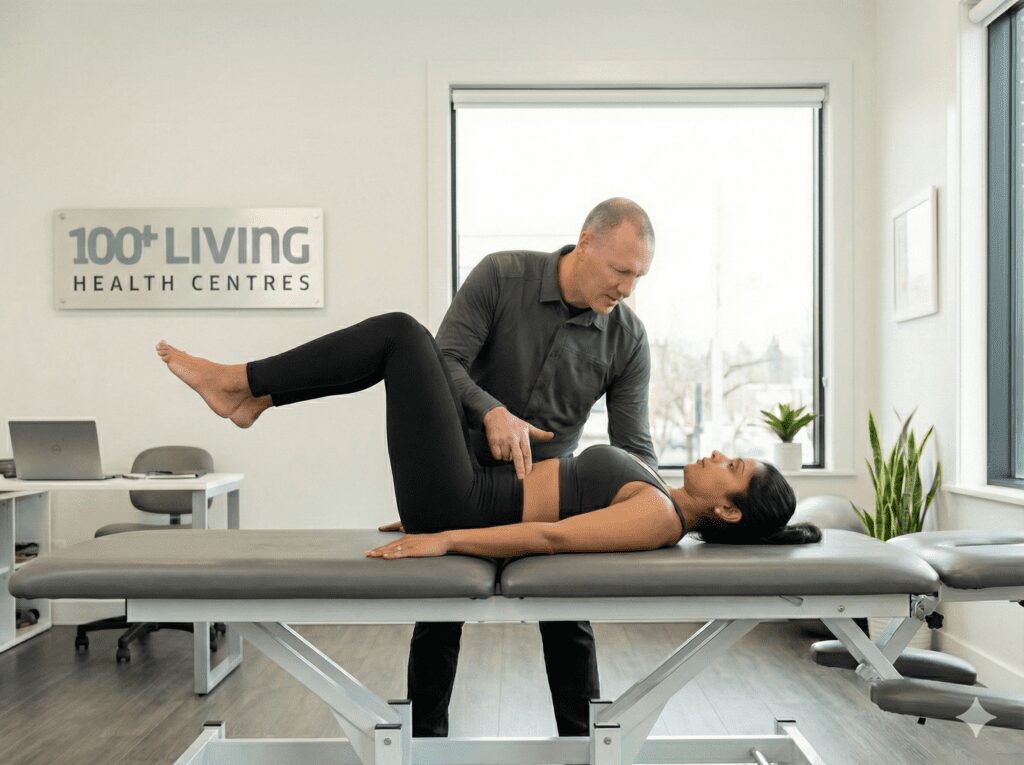
At 100+Living Health Centers here in Kelowna, we focus on posture correction and neurological function as a foundation for long-term health.
That means looking deeper than symptoms.
It means assessing structure properly, often with weight-bearing imaging, and creating a plan that actually addresses the root of the issue.
If you’ve been searching for a chiropractor in Kelowna and feel like you haven’t quite found the right fit yet, you’re not alone.
And when you’re ready to take a more intentional approach to your health, we’re here to help.
You can reach us at 100+Living Health Centres at 250-875-2225.
Take the Next Step
Don’t settle for temporary relief. Get care that helps correct the cause of your condition.
Step 1:
Start with a free 10-minute phone consult to discuss your symptoms and see if our approach is right for you.
Step 2:
Book your first comprehensive exam and consultation and get started.
The Bigger Picture
The conversation around longevity is important.
But it’s easy to focus on how long we live without thinking enough about how well we live.
Posture may not be the most exciting topic.
It doesn’t trend.
It doesn’t go viral.
But it quietly influences how your body functions every single day.
And over time, those daily influences add up.
So while predictions about the future can be interesting, the more important question is this:
What are we doing today that shapes that future?
Because when it comes to health, the small things, repeated consistently, tend to matter the most.