June is International Scoliosis Awareness Month, and after more than three decades of working with clients and their families, I can confidently say that scoliosis remains one of the most misunderstood conditions in healthcare.
In fact, if you were diagnosed with scoliosis ten or twenty years ago, there is a good chance you were told some version of the same story.
“Watch it.”
“Monitor it.”
“It probably won’t change.”
“There’s not much that can be done.”
Or perhaps the most frustrating statement of all:
“You’ll just have to live with it.”
I have never been comfortable with those answers.
Not because I think every scoliosis can be completely corrected. That would be unrealistic. Every spine is different. Every person is different. Every case presents its own unique challenges.
What I have learned, however, is that many people have been told there is nothing they can do when, in reality, there is often a great deal that can be done.
That difference changes lives.
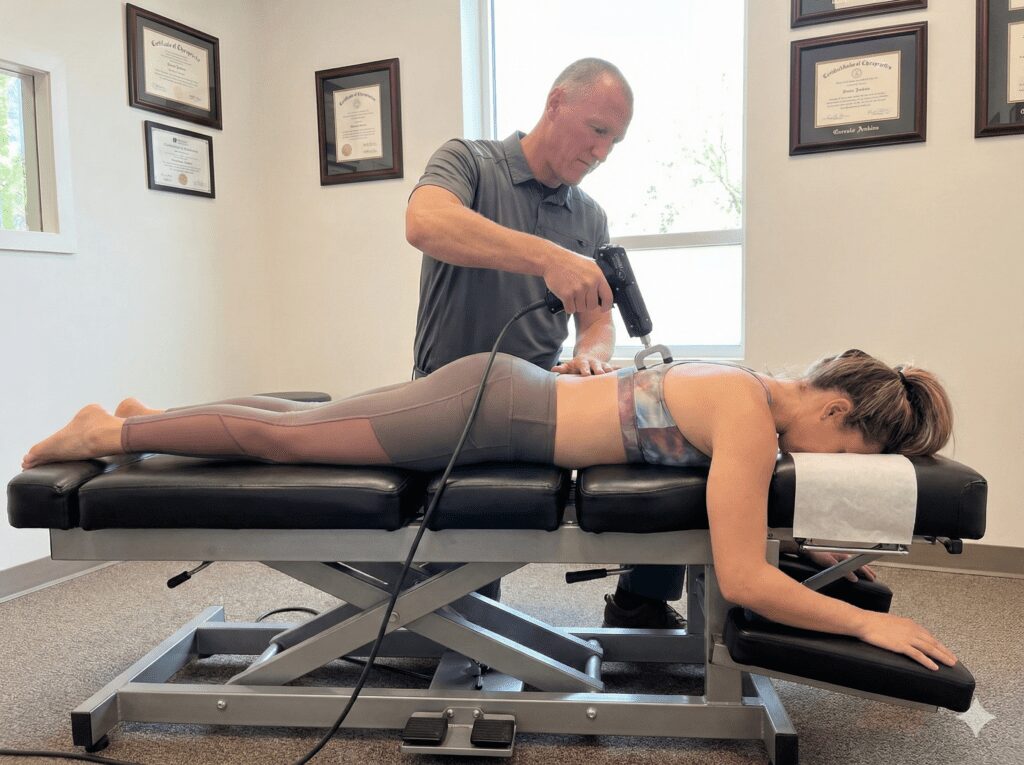
Over the past several years, advances in spinal rehabilitation, Chiropractic BioPhysics®, Mirror Image® rehabilitation, structural traction, and corrective exercise protocols have dramatically changed what is possible for many people living with scoliosis and postural disorders.
At 100+Living Health Centres, we see this every day.
We see teenagers who are worried about their future.
We see adults who have been told their only option is to wait until things get worse.
We see parents searching for answers after noticing one shoulder sitting higher than the other.
And we see people who simply want to live active, healthy lives without feeling like their spine is holding them back.
This article is about giving those people hope.
More importantly, it is about giving them information.
Because people can only make decisions based on the information they have.
And when it comes to scoliosis, most people simply haven’t been given the whole story.
Sarah’s Story: When “Just Watch It” Isn’t Good Enough
Several years ago, Sarah came to our office frustrated and discouraged.
She had been diagnosed with scoliosis years earlier and had essentially been told to monitor it and hope it didn’t get worse. Like many people with scoliosis, she learned to adapt. She adjusted how she sat. She adjusted how she stood. She accepted certain aches and pains as part of life.
The problem was that her body continued adapting as well.
Over time, the spinal curve became more noticeable. Her posture changed. She found herself becoming increasingly aware of asymmetries in her body. One shoulder sat differently than the other. Clothing fit unevenly. Certain activities became more difficult.
What bothered Sarah most wasn’t the appearance of the scoliosis.
It was the uncertainty.
Would it continue to worsen?
Would it eventually affect her ability to stay active?
Would she end up needing surgery?
These are questions we hear every week.
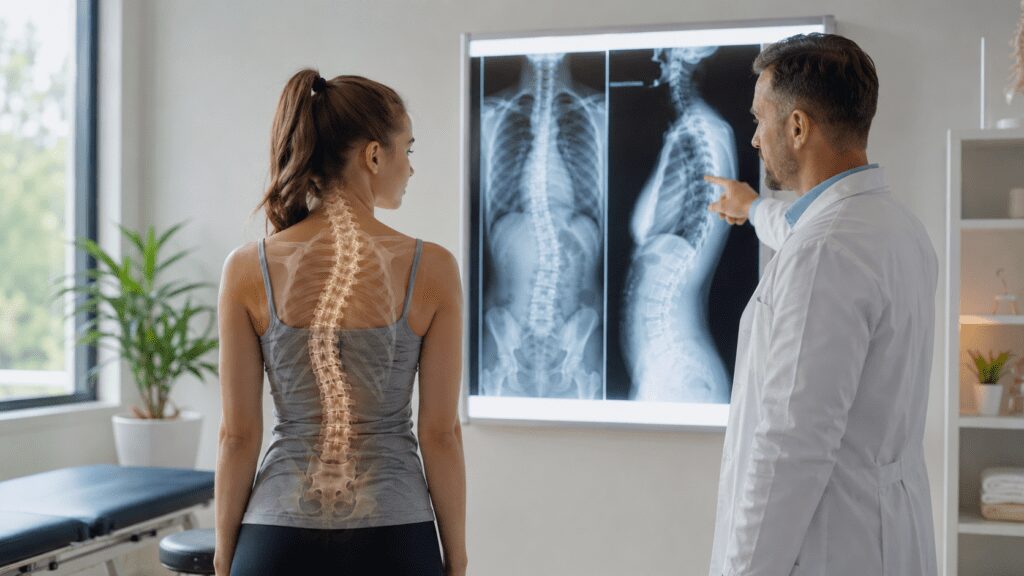
After a thorough structural examination, posture analysis, and weight-bearing X-rays, we developed a customized corrective care program designed specifically around Sarah’s spinal distortion pattern.
Not a generic exercise program.
Not random stretching.
Not a one-size-fits-all approach.
A plan based on her actual spine.
Over time, through a combination of corrective exercises, Mirror Image® rehabilitation, postural retraining, and structural traction, Sarah achieved measurable improvements in her posture, spinal alignment, and overall function.
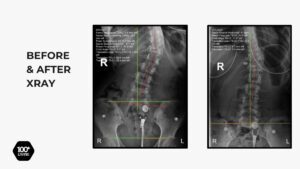
Most importantly, she regained confidence.
Instead of feeling like a passenger watching her scoliosis progress, she became an active participant in improving her future.
That is one of the greatest gifts modern corrective chiropractic can provide.
Hope backed by action.
What Exactly Is Scoliosis?
Simply put, scoliosis is an abnormal sideways curvature of the spine.
When viewed from the front or back, a healthy spine should appear relatively straight. In a person with scoliosis, the spine develops a side-to-side curve that often resembles the shape of a “C” or an “S.”
What many people don’t realize is that scoliosis is not simply a side bend.
The spine also rotates.
This rotational component is one of the reasons scoliosis can have such a significant effect on posture, balance, rib cage position, breathing mechanics, and overall function.
As the vertebrae rotate, the ribs often rotate with them.
This can create visible changes in the shoulders, rib cage, waistline, and pelvis.
In more advanced cases, these changes become increasingly obvious over time.
Why Scoliosis Is More Common Than Most People Realize
Traditional statistics often report scoliosis affecting approximately 2% to 3% of the population.
While that may be true for clinically diagnosed adolescent scoliosis, my experience over more than 30 years suggests structural spinal distortions are far more common than most people realize.
Many adults are walking around today with mild scoliosis and have no idea they have it. To learn more about Cobb angle and the different levels of scoliosis, click here.
Why?
Because pain is a terrible screening tool.
Some people with significant scoliosis have surprisingly little pain.
Others with relatively small curves experience considerable discomfort.
The size of the curve does not always determine the severity of symptoms.
This is one of the reasons I encourage families to think differently about spinal health.
Pain tells us very little about the structural condition of a spine.
The absence of pain should never be confused with the absence of a problem.
The Hidden Cost of Ignoring Scoliosis
When most people think about scoliosis, they think about appearance.
They think about uneven shoulders.
They think about posture.
They think about X-rays.
What they often don’t think about is what happens inside the body when spinal distortions remain uncorrected for decades.
Every degree of spinal distortion changes the way forces travel through the body.
Muscles compensate.
Ligaments compensate.
Discs compensate.
Joints compensate.
Eventually those compensations begin to accumulate.
The result is often accelerated wear and tear throughout the spine and surrounding structures.
This doesn’t happen overnight.
It happens gradually.
Year after year.
Decade after decade.
That is why early detection is so important.
When structural problems are identified early, we have a much greater opportunity to influence the future rather than simply reacting to it.
Why Scoliosis Is About More Than a Curve
One of the biggest mistakes I see people make is thinking that scoliosis is simply a sideways curve in the spine.
It isn’t.
Scoliosis is really a three-dimensional problem. The spine bends sideways, rotates, and changes the balance and mechanics of the entire body. The rib cage changes position, the shoulders become uneven, the pelvis compensates, and over time the nervous system learns to function around those distortions. That’s why two people with identical Cobb angles may experience completely different symptoms and very different qualities of life.
The human body is an amazing compensator.
For years, even decades, it will adapt to structural distortions and keep moving forward. Muscles work harder. Ligaments stretch. Joints wear unevenly. Discs remodel. Eventually, however, those compensations start to catch up with us. That’s why I often tell clients that pain is one of the last things to appear and one of the first things to disappear.
The goal should never be to wait for symptoms.
The goal should be to identify structural problems early enough that we can change the trajectory of someone’s future.
That’s what excites me most about today’s advanced corrective chiropractic.
It’s not really about pain.
It’s about preserving function.
How Your Spine Affects Your Nervous System
Most people think of the spine as a stack of bones.
In reality, the spine exists to protect one of the most important structures in the body: the nervous system.
Your brain and spinal cord control every tissue, every organ, every movement, every heartbeat, every breath, and every cell in your body. They coordinate everything. When spinal structure changes, the mechanics surrounding the nervous system change as well.
Now, that doesn’t mean every scoliosis curve causes nerve damage.
But it does mean that structure matters.
A healthy spine allows the nervous system to operate with less mechanical stress. Better posture means better movement. Better movement means better adaptation. Better adaptation means greater resilience over time.
At 100+Living Health Centres, we believe that protecting the nervous system should be one of the highest priorities in healthcare.
Because everything you hope to do with your body for the next fifty years depends on it.
The Breathing Connection Nobody Talks About
One area that doesn’t receive enough attention is breathing.
When the rib cage becomes distorted by scoliosis or hyperkyphosis, the lungs have less room to expand. The diaphragm changes position. Rib movement becomes restricted. Many people simply assume that getting older means losing endurance or becoming short of breath.
Sometimes, posture is a major part of the problem.
We recently saw this with Kory.
When Kory first came to our office, he had significant thoracic hyperkyphosis and severe forward head posture. His upper back had rounded considerably, and one of his biggest frustrations wasn’t pain.
It was breathing.
He simply couldn’t take the kind of deep breath that he used to.
Like many people, he had accepted this as a normal part of aging.
But it wasn’t normal.
His X-rays revealed significant postural distortion throughout the thoracic spine. The excessive rounding was affecting not only how he stood, but how his rib cage moved and how his lungs expanded.
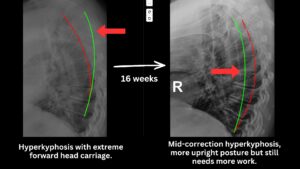
After sixteen weeks of corrective care, his follow-up X-rays showed measurable improvements. More importantly, Kory felt the changes.
He stood taller.
His energy improved.
His breathing became easier.
He moved with greater confidence.
And perhaps most importantly, he regained hope.
There is still work to do, but the changes that have already occurred remind me of something I have learned repeatedly over the last thirty years.
The body wants to heal.
The body wants to adapt.
The body wants to move toward health.
We simply have to provide the right inputs.
This Is Why Posture Matters
Unfortunately, posture is often viewed as cosmetic.
People think posture is about standing up straight or looking better in photographs.
I disagree.
Posture is really about function.
The position of your spine influences your balance, your movement, your breathing, your energy, and ultimately your quality of life. Poor posture isn’t simply an appearance issue. It is a window into how the body is adapting to stress.
And stress comes in many forms.
Physical stress.
Emotional stress.
Chemical stress.
Modern life supplies plenty of all three.
This is why I believe today’s corrective chiropractic is more important than ever.
People are sitting more.
Moving less.
Living under constant stress.
Sleeping poorly.
Looking down at screens for hours each day.
The spine and nervous system were never designed for that environment.
The good news is that the body is remarkably adaptable.
And when we understand the principles of structural correction and neurological rehabilitation, we can often help people achieve results they never thought possible.
Why “Watch and Wait” Doesn’t Make Sense
One of the most frustrating things I hear from people diagnosed with scoliosis is that they have been told to simply monitor it and come back if it gets worse.
I understand where that advice comes from. Many healthcare providers are trying to avoid unnecessary interventions. But if you’ve spent your career helping people restore posture and function, it becomes difficult to accept a strategy that waits for a problem to become bigger before doing anything about it.
Imagine telling someone with high blood pressure to come back after it gets higher.
Or telling someone to wait until they lose more muscle before starting exercise.
That approach doesn’t make much sense.
Yet that’s often what happens with scoliosis.
At 100+Living Health Centers, we believe the earlier we intervene, the greater the opportunity to influence the future. That doesn’t mean every curve can be completely corrected, but it does mean that many people have options they were never told about.
Hope is not a treatment plan.
But neither is hopelessness.
Why Traditional Approaches Often Fall Short
Many people are surprised to learn that most scoliosis treatment throughout history has focused on observation, pain management, bracing, or surgery.
Those certainly have their place.
Braces can be extremely important in certain cases. Surgery can be life-changing when severe curves threaten organ function or quality of life.
But there is a large group of people who fall somewhere in the middle.
Their curves may not be severe enough for surgery, yet they continue to experience progression, postural imbalance, reduced energy, stiffness, breathing limitations, and declining quality of life.
These are often the people who feel forgotten.
They are told nothing can be done.
Or they are told to simply exercise more and strengthen their core.
Unfortunately, scoliosis is not simply a muscle problem.
It’s a structural problem.
And structural problems require structural solutions.
What Makes Advanced Certified Chiropractic BioPhysics® Different?
One of the reasons I pursued Advanced Certification in Chiropractic BioPhysics® was because I became frustrated with simply chasing symptoms.
Helping someone feel better is important.
But helping them function better and changing the underlying mechanics of their spine is even more exciting.
CBP® is based on engineering principles, biomechanics, physics, and objective measurements. Instead of guessing, we measure. Instead of treating everyone the same, we customize care to the individual. Instead of asking how someone feels today, we ask how their spine is adapting over time.
Every spine has a story.
The X-rays tell that story.
And once we understand the story, we can begin writing a better ending.
Sarah’s Program Wasn’t Random
One of the biggest misconceptions people have about scoliosis exercises is that they are all the same.
Nothing could be further from the truth.
Sarah’s exercises were based entirely on her X-rays.
Her traction setup was based on her X-rays.
Her home rehabilitation was based on her X-rays.
Her mirror image exercises were based on her X-rays.
Even the direction of her adjustments was based on her X-rays.
Nothing was random.
Nothing was based on guesswork.
Nothing was based on how she felt that day.
The entire program was designed around the structural distortions unique to her spine.
And that matters.
Because scoliosis is a three-dimensional problem.
Two people with the same Cobb angle may require entirely different treatment strategies depending on their posture, rib cage rotation, pelvic balance, forward head posture, and overall spinal alignment.
That’s why cookie-cutter approaches often fail.
The Secret Is Looking at the Entire Spine
One of the biggest lessons I have learned over thirty years is that scoliosis is rarely just about scoliosis.
Hyperkyphosis influences scoliosis.
Forward head posture influences scoliosis.
Pelvic imbalance influences scoliosis.
Loss of the cervical curve influences scoliosis.
The body works as an integrated system.
If we focus on one area and ignore everything else, we often limit what is possible.
At 100+Living Health Centers, we don’t just look at the curve.
We look at the whole person.
How they breathe.
How they move.
How they stand.
How they walk.
How their nervous system is adapting.
How their spine functions as a complete unit.
Because that is where lasting change occurs.
It’s Never Too Early—and It’s Never Too Late
Parents often ask me when they should have their children checked.
My answer is simple.
Earlier is better.
Children adapt quickly. Teenagers adapt quickly. Young adults adapt quickly.
But here’s something that excites me just as much.
Adults adapt too.
I have seen people in their forties, fifties, sixties, and seventies make remarkable improvements.
Not because we are trying to make them twenty years old again.
But because the human body remains adaptable throughout life.
The body never stops trying to heal.
It never stops remodeling.
It never stops responding to the environment we provide.
The question isn’t whether your body can change.
The question is whether we are giving it the right inputs.
And that’s what today’s corrective chiropractic is really about.
Helping the body move toward health instead of away from it.
How Parents Can Screen Their Children at Home
One of the most rewarding parts of my career has been helping families catch structural problems early. Many parents are surprised to learn that scoliosis often develops silently. Children rarely complain. In fact, most don’t know anything is wrong because they have adapted to their posture gradually. That’s why awareness matters so much.
There are several simple things parents can watch for. One shoulder may sit higher than the other. The waistband of pants may appear uneven. One hip may seem more prominent. Shirts may hang differently from one side to the other. You may notice your child standing with their weight shifted to one side or consistently leaning when sitting.
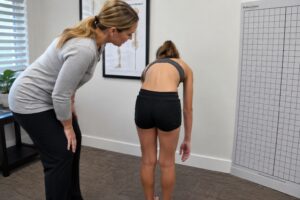
One of the easiest tests to perform at home is called the Adam’s Forward Bend Test. Have your child stand with their feet together and slowly bend forward while keeping their knees straight. Look across their back from behind. If one side of the rib cage appears higher than the other or there is visible asymmetry, it may be time for a more detailed structural examination.
These observations don’t necessarily mean your child has scoliosis.
But they do mean it would be wise to investigate further.
Because when it comes to scoliosis, early detection changes everything.
Signs Adults Should Never Ignore
Adults often assume that scoliosis is only something teenagers have to worry about.
Nothing could be further from the truth.
In fact, some of the most significant scoliosis cases we see are in adults who have spent decades adapting to postural distortions without realizing what was happening. Others develop degenerative scoliosis later in life as the spine loses its ability to compensate.
One shoulder sitting higher than the other.
Chronic tension in one side of the neck.
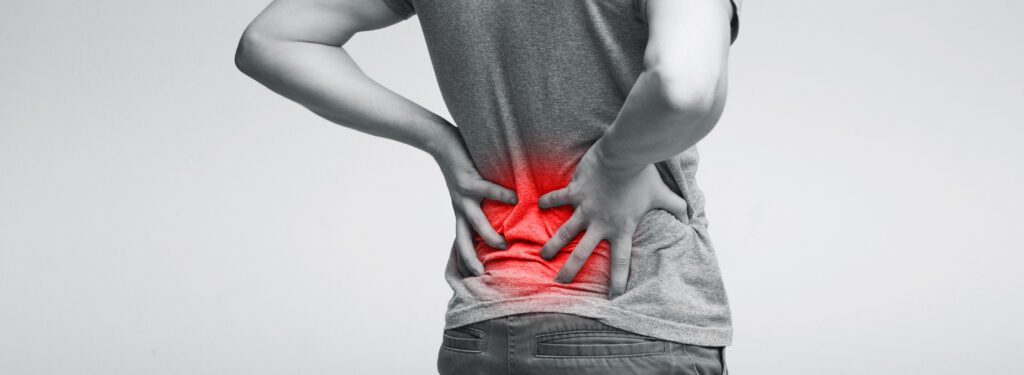
Low back pain that never completely resolves.
Difficulty taking a deep breath.
Clothes that don’t fit evenly.
A tendency to lean to one side.
These are all signs that your body may be compensating for something larger.
And while these changes may occur gradually, that doesn’t mean they should simply be accepted as a normal part of aging.
Growing older is inevitable.
Growing older poorly is not.
You Don’t Have To Wait Until It Gets Worse
Perhaps the greatest tragedy in healthcare is not what we don’t know.
It’s what people are told isn’t possible.
I’ve met too many people who have spent years believing they had no options.
Too many parents who were told to just watch and wait.
Too many adults who assumed their best years were behind them.
Too many people who thought surgery was their only choice.
And while surgery certainly has its place, it shouldn’t automatically be viewed as the inevitable ending to every scoliosis story.
Modern structural rehabilitation has changed what is possible.
Advanced Certified Chiropractic BioPhysics®, Mirror Image® rehabilitation, customized home exercises, and three-dimensional traction procedures are giving people options they simply didn’t have thirty years ago.
Not every case can be completely corrected.
Not every curve can be eliminated.
But many people can improve far more than they ever imagined.
And that changes lives.
This Is Why We Do What We Do
After more than thirty years in practice, I still get excited when I see a client stand taller.
I still get excited when someone breathes easier.
I still get excited when parents realize their child has options.
And I still get excited when someone who thought they were headed toward surgery discovers there may be another path.
Because that’s what 100+Living Health Centres is all about.
Helping people beat the odds.
Helping people preserve their quality of life.
Helping people stay active and independent.
Helping people move toward a healthier future instead of waiting for problems to become crises.
The truth is, scoliosis does not have to be a diagnosis of fear.
And hyperkyphosis does not have to be accepted as “just getting older.”
The body is remarkably adaptable.
It wants to heal.
It wants to move toward health.
Our job is simply to provide the right environment and the right inputs.
A Final Thought
If there is one thing I hope you take away from this article, it is this:
Never confuse “nothing can be done” with “nothing has been done.”
Those are two very different things.
If you’ve been told to simply watch your scoliosis.
If you’ve been frustrated with chronic pain or worsening posture.
If you’ve noticed your child developing asymmetries and don’t know where to turn.
Or if you’ve been told that surgery is your only option.
Please don’t give up.
At 100+Living Health Centres, we believe there is always value in asking one more question and seeking one more opinion.
Sometimes the future is far brighter than you’ve been led to believe.
And if you’re ready to discover what’s possible, we’d be honoured to help.
Call 100+Living Health Centres at 250-875-2225 or schedule a complimentary 10-minute phone consultation. As an Advanced Certified Chiropractic BioPhysics® practitioner with over thirty years of experience, I have dedicated my career to helping people improve posture, restore function, and avoid unnecessary surgery whenever possible.
Take the Next Step
Don’t settle for temporary relief. Get care that helps correct the cause of your condition.
Step 1:
Start with a free 10-minute phone consult to discuss your symptoms and see if our approach is right for you.
Step 2:
Book your first comprehensive exam and consultation and get started.
References
Adams JB. Scoliosis and the natural history of spinal deformity. Journal of Bone and Joint Surgery. 1882;64:67-81.
Asher MA, Burton DC. Adolescent idiopathic scoliosis: Natural history and long-term treatment effects. Scoliosis. 2006;1:2.
Bettany-Saltikov J, Parent E, Romano M, Villagrasa M, Negrini S. Physiotherapeutic scoliosis-specific exercises for adolescent idiopathic scoliosis. European Journal of Physical and Rehabilitation Medicine. 2014;50(1):111-121.
Bunnell WP. Selective screening for scoliosis. Clinical Orthopaedics and Related Research. 2005;434:40-45.
Cailliet R. Soft Tissue Pain and Disability. Philadelphia: F.A. Davis; 1996.
Cailliet R. Neck and Arm Pain. Philadelphia: F.A. Davis; 1991.
Cailliet R. Low Back Pain Syndrome. Philadelphia: F.A. Davis; 1988.
Gelb DE, Lenke LG, Bridwell KH, et al. An analysis of sagittal spinal alignment in one hundred asymptomatic middle and older aged volunteers. Spine. 1995;20(12):1351-1358.
Glassman SD, Bridwell K, Dimar JR, Horton W, Berven S, Schwab F. The impact of positive sagittal balance in adult spinal deformity. Spine. 2005;30(18):2024-2029.
Grivas TB, Vasiliadis ES, Rodopoulos G. The role of growth and biomechanics in the development of idiopathic scoliosis. Scoliosis. 2008;3:7.
Grivas TB, Wade MH, Negrini S, et al. SOSORT consensus paper: School screening for scoliosis. Scoliosis. 2007;2:17.
Harrison DE, Harrison DD, Cailliet R, Janik TJ, Holland B. Radiographic analysis of lumbar lordosis: Centroid, Cobb, TRALL and Harrison posterior tangent methods. Spine. 2001;26(11):E235-E242.
Harrison DE, Harrison DD, Haas JW. Structural rehabilitation of the spine and posture. Journal of Manipulative and Physiological Therapeutics. 2002;25(6):E1-E17.
Harrison DE, Cailliet R, Janik TJ, Troyanovich SJ, Harrison DD. Elliptical modeling of the thoracic spine and thoracic kyphosis. Spine. 2001;26:E214-E220.
Harrison DE, Janik TJ, Harrison DD, Holland B, Cailliet R. Reliability of spinal displacement measurements. Spine. 2001;26:E97-E104.
Harrison DE, Oakley PA, Haas JW. Non-surgical reduction of lumbar hyperlordosis and sagittal imbalance. Journal of Physical Therapy Science. 2018;30(4):540-547.
Janicki JA, Alman B. Scoliosis: Review of diagnosis and treatment. Paediatrics & Child Health. 2007;12(9):771-776.
Kado DM, Huang MH, Barrett-Connor E, Greendale GA. Hyperkyphotic posture predicts mortality in older community-dwelling women. Journal of the American Geriatrics Society. 2004;52(10):1662-1667.
Kado DM, Christianson L, Palermo L, Smith-Bindman R, Cummings SR. Hyperkyphosis and decline in pulmonary function. American Journal of Respiratory and Critical Care Medicine. 2009;179(4):366-373.
Kado DM, Prenovost K, Crandall C. Narrative review: Hyperkyphosis in older persons. Annals of Internal Medicine. 2007;147(5):330-338.
Katz DE, Durrani AA. Factors that influence outcomes in adolescent idiopathic scoliosis. Orthopedic Clinics of North America. 2007;38(4):551-558.
Katzman WB, Wanek L, Shepherd JA, Sellmeyer DE. Age-related hyperkyphosis: Epidemiology, consequences and management. Current Osteoporosis Reports. 2010;8(1):21-27.
Konieczny MR, Senyurt H, Krauspe R. Epidemiology of adolescent idiopathic scoliosis. Journal of Children’s Orthopaedics. 2013;7(1):3-9.
Lenke LG, Betz RR, Harms J, et al. Adolescent idiopathic scoliosis classification system. Spine. 2001;26(10):1161-1167.
Lonstein JE, Carlson JM. The prediction of curve progression in untreated idiopathic scoliosis. Journal of Bone and Joint Surgery. 1984;66(7):1061-1071.
Morningstar MW, Woggon D, Lawrence G. Scoliosis treatment using Chiropractic BioPhysics methods. Journal of Vertebral Subluxation Research. 2004;1-9.
Morningstar MW, Joy T, Woggon D, Lawrence G. Chiropractic rehabilitation for scoliosis and spinal deformity. Journal of Pediatric, Maternal and Family Health Chiropractic. 2010;2:1-6.
Negrini S, Donzelli S, Aulisa AG, et al. 2016 SOSORT guidelines: Orthopaedic and rehabilitation treatment of idiopathic scoliosis during growth. Scoliosis and Spinal Disorders. 2018;13:3.
Negrini S, Hresko TM, O’Brien JP, Price N. Recommendations for research studies on treatment of idiopathic scoliosis. Scoliosis. 2015;10:8.
Nachemson AL, Peterson LE. Effectiveness of treatment with a brace in girls with adolescent idiopathic scoliosis. Journal of Bone and Joint Surgery. 1995;77(6):815-822.
Parent EC, Newton PO, Wenger DR. Adolescent idiopathic scoliosis: Etiology, anatomy, natural history and bracing. Instructional Course Lectures. 2005;54:529-536.
Romano M, Minozzi S, Bettany-Saltikov J, et al. Exercises for adolescent idiopathic scoliosis. Cochrane Database of Systematic Reviews. 2012;(8):CD007837.
Schwab F, Patel A, Ungar B, Farcy JP, Lafage V. Adult spinal deformity and quality of life. Spine. 2010;35(25):2224-2231.
Schwab F, Lafage V, Patel A, Farcy JP. Sagittal plane considerations and quality of life. Spine. 2009;34(17):1828-1833.
Smith JS, Shaffrey CI, Berven S, et al. Operative versus non-operative treatment of adult spinal deformity. Neurosurgery. 2009;65(1):86-93.
Veldhuizen AG, Wever DJ, Webb PJ. The etiology of idiopathic scoliosis: Biomechanical and neuromuscular considerations. European Spine Journal. 2000;9(3):178-184.
Weinstein SL, Zavala DC, Ponseti IV. Idiopathic scoliosis: Long-term follow-up and natural history. Journal of Bone and Joint Surgery. 1981;63(5):702-712.
Weinstein SL, Dolan LA, Wright JG, Dobbs MB. Effects of bracing in adolescents with idiopathic scoliosis. New England Journal of Medicine. 2013;369(16):1512-1521.
Hresko MT. Clinical practice: Idiopathic scoliosis in adolescents. New England Journal of Medicine. 2013;368(9):834-841.
Posture and Longevity References
Kado DM, Huang MH, Barrett-Connor E, Greendale GA. Hyperkyphotic posture predicts mortality independent of vertebral osteoporosis. Journal of the American Geriatrics Society. 2004;52(10):1662-1667.
Kado DM, Christianson L, Palermo L. Hyperkyphosis predicts pulmonary decline and mortality. American Journal of Respiratory and Critical Care Medicine. 2009;179(4):366-373.
Katzman WB, Vittinghoff E, Kado DM. Age-related hyperkyphosis and physical function. Osteoporosis International. 2011;22(3):763-769.
Chiropractic BioPhysics and Structural Rehabilitation
Harrison DD, Harrison DE, Janik TJ, et al. Modeling of the cervical lordosis and sagittal alignment. Spine. 2004;29(22):2485-2491.
Oakley PA, Harrison DE. Radiographic biomechanical analysis and spinal rehabilitation methods. Journal of Physical Therapy Science. 2018;30(4):540-547.
Oakley PA, Cuttler JM, Harrison DE. X-ray imaging is essential for spinal rehabilitation and diagnosis. Dose-Response. 2018;16(2):1-12.
Oakley PA, Harrison DE. Contemporary evidence supporting Chiropractic BioPhysics methods. Journal of Contemporary Chiropractic. 2019;2:44-49.
Books
Caillet R. The Rejuvenation Strategy.
Caillet R. Soft Tissue Pain and Disability.
Harrison DD, Harrison DE. Chiropractic Biophysics Textbook.
Jenkins G, Henstock H. Your Complete Posture Guide: How Improving Your Posture May Be the Key to Staying Young and Healthy for a Lifetime.
Scientific References and Further Reading
Hresko MT. Clinical Practice: Idiopathic Scoliosis in Adolescents.
New England Journal of Medicine. 2013;368(9):834-841.
https://www.nejm.org/doi/full/10.1056/NEJMcp1209063
Weinstein SL, Dolan LA, Wright JG, Dobbs MB. Effects of Bracing in Adolescents with Idiopathic Scoliosis.
New England Journal of Medicine. 2013;369(16):1512-1521.
https://www.nejm.org/doi/full/10.1056/NEJMoa1307337
Free full text:
https://pmc.ncbi.nlm.nih.gov/articles/PMC3913566/ (PMC)
Lonstein JE, Carlson JM. The Prediction of Curve Progression in Untreated Idiopathic Scoliosis.
Journal of Bone and Joint Surgery. 1984;66(7):1061-1071.
https://pubmed.ncbi.nlm.nih.gov/6480635/
Konieczny MR, Senyurt H, Krauspe R. Epidemiology of Adolescent Idiopathic Scoliosis.
Journal of Children’s Orthopaedics. 2013;7(1):3-9.
https://pubmed.ncbi.nlm.nih.gov/24432052/
Negrini S, Donzelli S, Aulisa AG, et al. SOSORT Guidelines for Conservative Treatment of Idiopathic Scoliosis During Growth.
Scoliosis and Spinal Disorders. 2018.
https://scoliosisjournal.biomedcentral.com/articles/10.1186/s13013-017-0145-8
Romano M, Minozzi S, Bettany-Saltikov J, et al. Exercises for Adolescent Idiopathic Scoliosis.
Cochrane Database of Systematic Reviews.
https://pubmed.ncbi.nlm.nih.gov/22895925/
Bettany-Saltikov J, Parent E, Romano M, et al. Physiotherapeutic Scoliosis Specific Exercises.
European Journal of Physical and Rehabilitation Medicine.
https://pubmed.ncbi.nlm.nih.gov/24458195/
Schwab F, Patel A, Ungar B, Farcy JP, Lafage V. Adult Spinal Deformity and Quality of Life.
Spine. 2010;35(25):2224-2231.
https://pubmed.ncbi.nlm.nih.gov/21102249/
Hyperkyphosis and Longevity
Kado DM, Huang MH, Barrett-Connor E, Greendale GA. Hyperkyphotic Posture Predicts Mortality in Older Community-Dwelling Men and Women.
Journal of the American Geriatrics Society. 2004;52(10):1662-1667.
https://pubmed.ncbi.nlm.nih.gov/15450042/ (PubMed)
Kado DM, Lui LY, Ensrud KE, et al. Hyperkyphosis Predicts Mortality Independent of Vertebral Osteoporosis in Older Women.
Annals of Internal Medicine. 2009.
Free full text:
https://pmc.ncbi.nlm.nih.gov/articles/PMC2711520/ (PMC)
Kado DM, Christianson L, Palermo L, Smith-Bindman R, Cummings SR. Hyperkyphosis and Decline in Pulmonary Function.
American Journal of Respiratory and Critical Care Medicine.
https://pubmed.ncbi.nlm.nih.gov/19164700/
Katzman WB, Wanek L, Shepherd JA, Sellmeyer DE. Age-Related Hyperkyphosis: Its Causes, Consequences and Management.
Journal of Orthopaedic & Sports Physical Therapy.
https://www.jospt.org/doi/full/10.2519/jospt.2010.3099 (JOSPT)
Sagittal Balance and Quality of Life
Glassman SD, Bridwell K, Dimar JR, Horton W, Berven S, Schwab F. The Impact of Positive Sagittal Balance in Adult Spinal Deformity.
Spine. 2005.
https://pubmed.ncbi.nlm.nih.gov/16166889/
Gelb DE, Lenke LG, Bridwell KH, et al. Sagittal Spinal Alignment in Asymptomatic Adults.
Spine. 1995.
https://pubmed.ncbi.nlm.nih.gov/7676341/
Chiropractic BioPhysics and Structural Rehabilitation
Harrison DE, Harrison DD, Haas JW. Structural Rehabilitation of the Spine and Posture.
Journal of Manipulative and Physiological Therapeutics.
https://pubmed.ncbi.nlm.nih.gov/12131735/
Harrison DE, Harrison DD, Cailliet R, Janik TJ, Holland B. Radiographic Analysis of Lumbar Lordosis.
Spine. 2001.
https://pubmed.ncbi.nlm.nih.gov/11462092/
Oakley PA, Cuttler JM, Harrison DE. X-Ray Imaging is Essential for Contemporary Chiropractic and Manual Therapy Spinal Rehabilitation.
Dose-Response. 2018.
Free full text:
https://www.ncbi.nlm.nih.gov/pmc/articles/PMC6047802/
Morningstar MW, Woggon D, Lawrence G. Scoliosis Treatment Using Chiropractic BioPhysics Methods.
Journal of Vertebral Subluxation Research.
Professional Organizations
SOSORT (International Society on Scoliosis Orthopaedic and Rehabilitation Treatment)
Scoliosis Research Society
Chiropractic BioPhysics® Nonprofit Research Foundation
PubMed
https://pubmed.ncbi.nlm.nih.gov
National Library of Medicine
National Institutes of Health
Recommended Books and Resources for Families Living with Scoliosis
One of the most empowering things a family can do after receiving a scoliosis diagnosis is to become educated. Fear often comes from uncertainty, and uncertainty usually comes from a lack of information. The more you understand about posture, spinal biomechanics, breathing, and neurological function, the better equipped you are to make informed decisions about your health and the health of your children.
Fortunately, today’s families have access to resources and information that simply weren’t available twenty or thirty years ago. Below are some of the organizations, books, and educational resources that I have found most valuable over the course of my career.
Professional Organizations
Scoliosis Research Society (SRS)
The Scoliosis Research Society is one of the world’s leading organizations dedicated to education and research on spinal deformity. Their website contains information on scoliosis, bracing, surgery, and current research.
International Society on Scoliosis Orthopaedic and Rehabilitation Treatment (SOSORT)
SOSORT focuses on conservative treatment and rehabilitation approaches for scoliosis and postural disorders. Their clinical guidelines are considered among the most comprehensive available.
National Institutes of Health (NIH)
The NIH provides evidence-based information regarding scoliosis and related spinal disorders.
National Library of Medicine and PubMed
PubMed is one of the largest collections of scientific and medical research in the world. Families interested in diving deeper into the literature can access thousands of research papers through this resource.
https://pubmed.ncbi.nlm.nih.gov
Chiropractic BioPhysics® Nonprofit Research Foundation
The CBP® Research Foundation provides information on spinal biomechanics, posture, and structural rehabilitation.
Books I Recommend
Your Complete Posture Guide: How Improving Your Posture May Be the Key to Staying Young and Healthy for a Lifetime
By Dr. Graham Jenkins BSc DC
Posture affects much more than appearance. This book explores the connection between posture, spinal health, neurological function, breathing, and healthy aging. It is an excellent introduction for anyone wanting to understand why spinal structure matters.
Scoliosis and the Human Spine
By Martha Hawes
Dr. Hawes has been one of the leading advocates for scoliosis education and conservative care. Her work provides valuable insight into the natural history of scoliosis and the importance of understanding the whole person rather than just the Cobb angle.
Chiropractic Biophysics®: A Scientific Approach to Spinal Rehabilitation
By Donald Harrison, Deed Harrison, and Joseph Haas
This textbook helped shape much of our modern understanding of spinal biomechanics and corrective care. While written primarily for healthcare professionals, it demonstrates the engineering and physics principles behind structural rehabilitation.
The Rejuvenation Strategy
By Dr. René Cailliet
Dr. Cailliet was Director of Physical Medicine and Rehabilitation at the University of Southern California and one of the early pioneers who emphasized the relationship between posture and healthy aging. His work influenced generations of rehabilitation specialists and chiropractors.
Soft Tissue Pain and Disability
By Dr. René Cailliet
A classic text on biomechanics, posture, and how repetitive stress affects the body over time.
Helpful Videos and Educational Channels
100+Living YouTube Channel
Our YouTube channel contains hundreds of educational videos covering scoliosis, posture correction, hyperkyphosis, disc injuries, breathing, longevity, and modern corrective chiropractic. Many people find it helpful to see exercises, case studies, and X-ray reviews explained visually.
Subscribe to the 100+Living YouTube channel for regular updates and new educational content.
A Final Word
If there is one thing I hope you take away from this article, it is that education creates options.
Too many people have been told to simply watch and wait.
Too many families have been left believing that surgery is inevitable.
And too many adults have accepted poor posture and declining function as a normal part of aging.
I don’t believe that story.
After more than thirty years in practice and advanced training in Chiropractic BioPhysics®, I have seen too many lives changed to accept hopelessness as the final answer.
The body is remarkably adaptable.
When we provide the right inputs, extraordinary things can happen.
And sometimes, all it takes to change a future is one more question, one more opinion, and the courage to believe that perhaps more is possible than you’ve been told.
This content is intended for educational purposes only and is not a substitute for professional medical advice. Always consult with a qualified healthcare provider regarding your specific health concerns.
If you would like to learn more about scoliosis, hyperkyphosis, posture correction, or avoiding unnecessary surgery, contact 100+Living Health Centres in Kelowna at 250-875-2225 or schedule a complimentary 10-minute consultation. Because living to 100 is important—but living well to 100 is even better.
Take the Next Step
Don’t settle for temporary relief. Get care that helps correct the cause of your condition.
Step 1:
Start with a free 10-minute phone consult to discuss your symptoms and see if our approach is right for you.
Step 2:
Book your first comprehensive exam and consultation and get started.