Sitting at a computer for six or more hours a day increases your risk of death by 40%.
That’s not a dramatic headline — that’s what the research has been pointing toward for years. And yet, for most people, sitting at a desk all day has become completely normal. It’s how we work, how we communicate, and even how we relax at the end of the day.
The problem is, the effects of prolonged sitting don’t show up right away. They build slowly. Quietly. And by the time most people notice something is wrong, the pattern has already been there for years.
The Real Dangers of Sitting at a Computer All Day
When people talk about the dangers of sitting at a computer all day, they often focus on inactivity. But inactivity is only part of the story. The real issue is what happens to your body while you’re sitting.
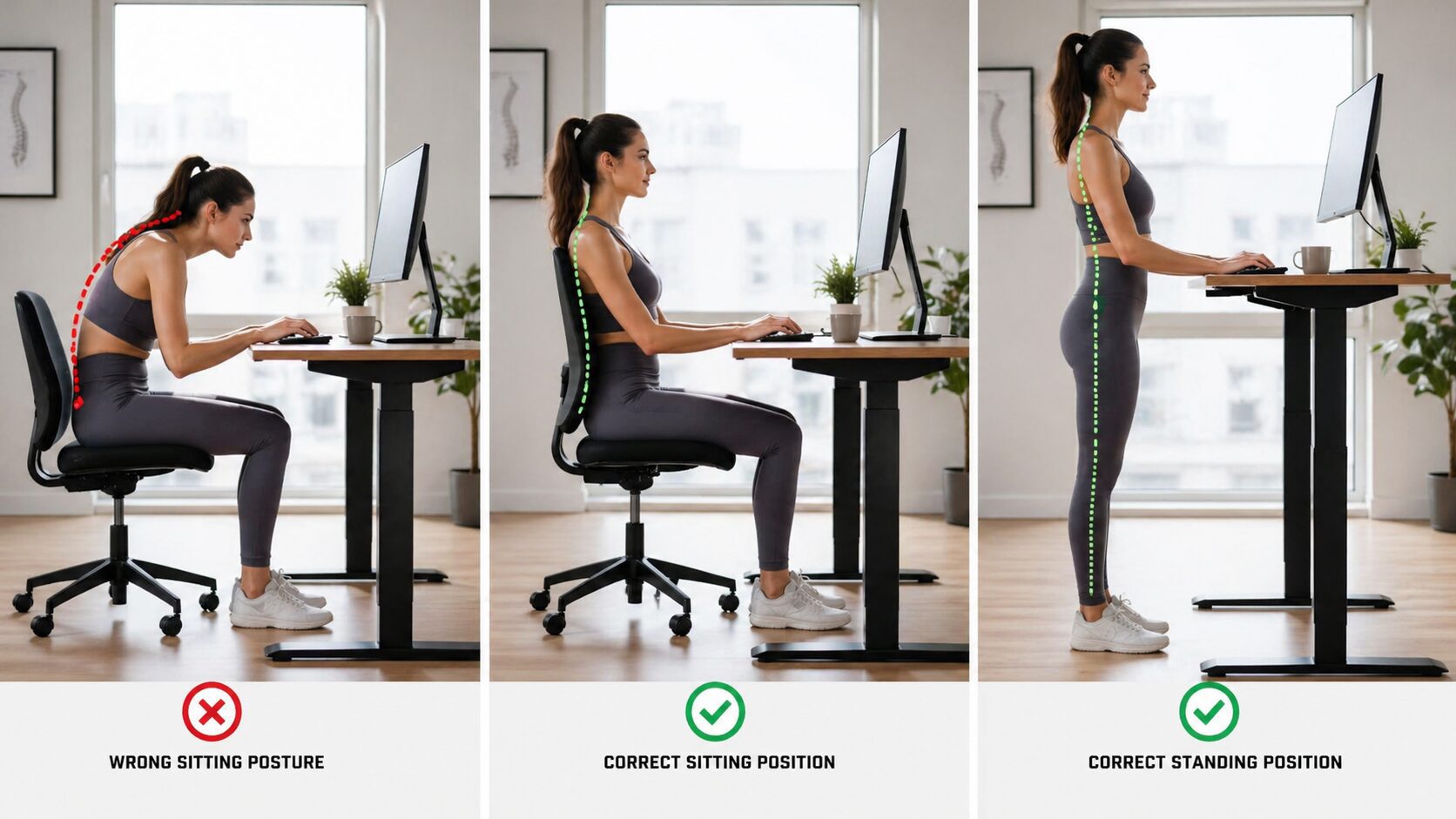
Your head drifts forward. Your shoulders round. Your upper back collapses. Your lower spine takes on constant stress. This is where bad computer posture effects begin, and over time, those patterns become your new normal.
This is why so many people start to experience sitting too long lower back pain, stiffness in the neck and shoulders, and a gradual loss of mobility. These are not random symptoms. They are predictable outcomes of sitting at a desk all day with poor posture.
What Is Sitting Disease?
There’s a term that’s been used more frequently in recent years — sitting disease. While it’s not a formal diagnosis, it describes the very real sedentary lifestyle health risks associated with prolonged sitting.
The list of sitting disease symptoms continues to grow. Increased cardiovascular risk, metabolic changes, reduced circulation, muscle imbalances, and chronic sitting too long back pain are just the beginning. Perhaps more concerning is the steady decline in how well your body functions over time.
Why Movement Alone Isn’t Enough
Most people try to solve this by standing more. Standing desks have become popular, and for good reason. But standing still all day doesn’t solve the problem. It simply changes the position you’re stuck in.
Your body needs movement. Real, consistent movement.
The spine is designed to move, and when it doesn’t, the nervous system begins to slow down. This is one of the most overlooked effects of sitting too much. It’s not just about muscles and joints — it’s about how your brain and body communicate.
Your spine plays a key role in how your nervous system functions. When you spend long periods sitting at a desk all day without movement, that input is reduced. Over time, this affects energy levels, focus, stress resilience, and recovery.
Your Spine and Your Brain Are Connected
There’s a neurological component to all of this that most people never consider.
Your spine isn’t just supporting your body — it’s feeding your brain.
Movement of the spine provides stimulation that supports brain function, coordination, and overall performance.
When you spend long periods sitting at a desk all day without movement, that input is reduced.
Over time, that affects more than just how you feel physically.
It affects:
- energy levels
- focus
- stress resilience
- recovery
This is one of the less obvious effects of sitting too much, but one of the most important.
The Hidden Factor: Your Environment Matters
There’s also another layer to modern desk life that often gets overlooked, your environment.
We’ve replaced older monitors with modern screens that are much safer in terms of radiation, but we’ve also surrounded ourselves with constant wireless exposure. WiFi routers, Bluetooth devices, and phones sitting inches away from us all day long.
This constant exposure may not create immediate symptoms, but over time it can contribute to headaches, fatigue, sleep disruption, and difficulty concentrating. These are subtle but important prolonged sitting effects that often get ignored.
Simple changes like using an ethernet cable when possible, keeping devices slightly further away from your body, and being mindful of how much time you spend connected can reduce that overall load.
Posture Is Where Everything Comes Together
If there’s one factor that ties all of this together, it’s posture.
There are well over a thousand studies linking poor posture to negative health outcomes. That alone should tell us that posture is not just about appearance. It’s about function.
Poor posture side effects go far beyond a sore neck or tight shoulders. Over time, the long-term effects of bad posture can include spinal degeneration, reduced lung capacity, nerve interference, and decreased mobility.
Even small changes in posture, like a slight forward head position, can dramatically increase stress on the spine. This is where the side effects of bad sitting posture begin to accumulate.
One of the biggest mistakes people make is assuming that if they look fine, they are fine. But the body is very good at compensating. You can have underlying structural issues that don’t show up clearly on the outside.
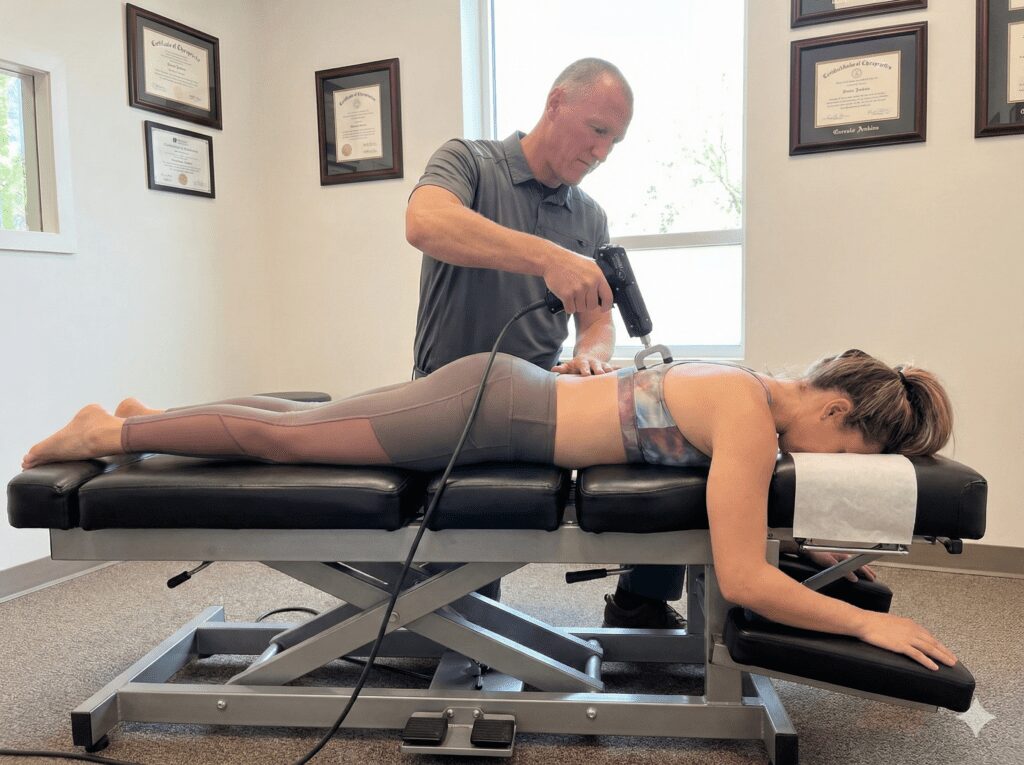
This is why a proper posture assessment matters. At 100+Living, we look beyond what you see in the mirror and assess how your body is functioning under load.
If you want to understand how this works in more detail, you can learn more about posture correction here.
Many people don’t realize that issues like neck pain from sitting and recurring back pain are often tied directly to these structural changes. If that’s something you’re dealing with, you can explore neck pain solutions here. And for more on lower back pain solutions here.
Structural Problems Require Structural Solutions
When structural problems are left unaddressed, they don’t stay the same. They progress. That’s when bad posture side effects become harder to ignore.
Stretching and exercise can help, but they don’t always correct the underlying issue. If the spine has adapted to years of poor positioning, it requires a more targeted approach.
This is where corrective chiropractic care comes in.
At 100+Living Health Centers, we focus on structural correction using advanced methods that assess and improve how the spine functions over time. If you’re interested in how this works, you can read more here.
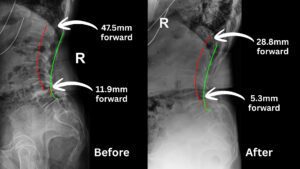
When you can see structural improvement, you’re no longer guessing. You know something meaningful has changed.
So what can you actually do about all of this?
5 Things You Can Do Today to Undo the Damage of Sitting All Day
You don’t need to completely overhaul your life. But you do need to start making better decisions consistently.
- Start by moving every 30 minutes. Even short breaks can reset your spine and nervous system.
- Adjust your screen height so it’s at eye level. This alone can reduce forward head posture significantly.
- Strengthen your core and postural muscles so your body has the support it needs.
- Reduce unnecessary wireless exposure where possible.
- And most importantly, get your posture assessed properly so you know what you’re dealing with.
If you’re tired of dealing with the same issues and you’re looking for a more structured, clinically focused approach, this is where we can help.
At 100+Living Health Centers, we focus on correcting the root cause, not just managing symptoms. If you’ve been searching for a chiropractor in Kelowna and want a clearer path forward, you can call us at 250-875-2225 to get started.
Take the Next Step
Don’t settle for temporary relief. Get care that helps correct the cause of your condition.
Step 1:
Start with a free 10-minute phone consult to discuss your symptoms and see if our approach is right for you.
Step 2:
Book your first comprehensive exam and consultation and get started.
The effects of sitting at a desk all day don’t show up overnight. That’s what makes them easy to ignore.
But over time, they shape how you move, how you feel, and how you age.
The people who stay active, mobile, and healthy long term aren’t just lucky.
They made better decisions earlier.
And you can start doing the same today.