Your mom was right.
When she told you to stand up straight, she probably was not thinking about PubMed, neurosurgery, brain function, lung capacity, or longevity. She was just being a mom. But modern research is showing us that posture may be far more important than most people realise.
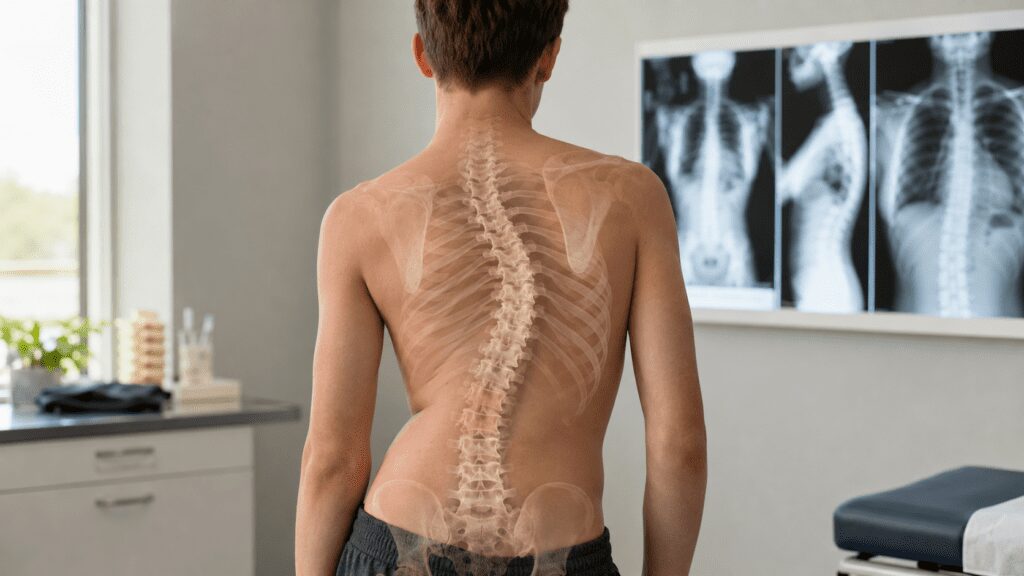
The bad posture effects most people think about are usually simple things like looking slouched, feeling tight, or having neck and back pain. Those things matter, but they are only part of the story. Poor posture may also affect breathing, balance, spinal health, neurological function, stress, mobility, and the way your body ages over time.
At 100+Living Health Centres in Kelowna, we look at posture through a bigger lens.
Posture is not just how you look in the mirror. Posture is a window into how your spine, nervous system, muscles, joints, and brain are adapting to life. That is why we often say:
Posture = Neurology = Longevity.
This does not mean posture is the only factor in living a long and healthy life. Nutrition, movement, sleep, stress, relationships, purpose, and community all matter. But posture is one of the most overlooked pieces of the longevity puzzle.
The Research Is Getting Harder to Ignore
Searches for posture and mortality now return more than 1,000 scientific results. Not every paper says the same thing, and not every study is about chiropractic care. But the larger pattern is important: posture is connected to function, and function is connected to healthy ageing.
One of the strongest areas of research involves hyperkyphosis, which is excessive rounding of the upper back. Several studies have linked more severe kyphotic posture with increased risk of loss of independence, reduced physical function, breathing limitations, falls, and even higher mortality risk in older adults.
In plain language, when the body bends forward and stays there, life often gets harder.
People may breathe less efficiently. They may lose balance. They may walk slower. They may lose strength. They may become less active. Over time, these changes can affect independence, confidence, and quality of life.
That is why posture should never be dismissed as cosmetic.
It is not just about standing taller. It is about functioning better for as long as possible.
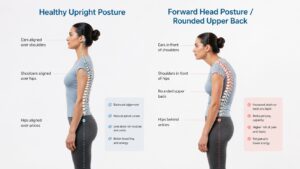
Reason 1: Poor Posture Can Affect the Spine and Nervous System
Alf Breig was a Swedish neurosurgeon who studied mechanical tension in the nervous system. His work helped show that the spinal cord and nervous system are not just passive wires running through the spine. They are living tissues that can be affected by movement, position, pressure, and tension.
In simple terms, when your posture collapses forward, your spinal cord and nerves may experience different mechanical stresses.
Think of the spinal cord like a delicate communication highway. Your brain sends messages down the spinal cord, and your body sends information back up. Those signals help control movement, balance, coordination, organ function, pain perception, and countless other processes.
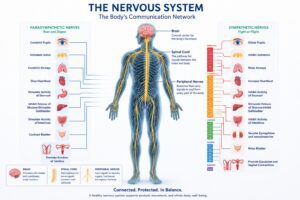
When posture becomes distorted, especially over years or decades, the body may begin to compensate. Muscles tighten. Joints stiffen. The head shifts forward. The shoulders round. The spine loses its normal curves. These changes may influence how the nervous system receives and sends information.
This does not mean every slouch creates a disease. It does mean that posture has a relationship with neurological function.
At 100+Living Health Centres, this is one of the reasons we take posture correction in Kelowna so seriously. We are not simply trying to make people look better. We are working to support healthier movement, better spinal mechanics, and improved neurological input.
You can learn more about this approach on our page about posture correction in Kelowna.
Reason 2: Poor Posture Can Affect Breathing, Balance, and Independence
One of the clearest long-term effects of bad posture is the way it changes the shape and function of the body.
When the upper back rounds forward, the rib cage has less room to move. The head often shifts forward. The shoulders roll inward. The chest can become compressed. Over time, this may affect breathing mechanics, spinal mobility, balance, and physical confidence.
This matters because breathing and movement are deeply connected to healthy ageing.

If you cannot breathe well, you may not move well. If you cannot move well, you may become less active. If you become less active, you may lose strength, balance, and independence. That chain reaction can begin slowly and quietly, long before a person thinks of themselves as old.
Research on hyperkyphosis has shown associations with reduced pulmonary function, physical decline, falls, and increased mortality risk in older adults. That does not mean posture is the only cause. Age, disease, injury, bone health, strength, and lifestyle all matter. But posture appears to be one important part of the bigger picture.
This is one reason we believe spinal health and longevity belong in the same conversation.
The goal is not just to help people feel better today. The goal is to help them keep moving, breathing, adapting, and participating in life for decades to come.
That is what 100+Living is about.
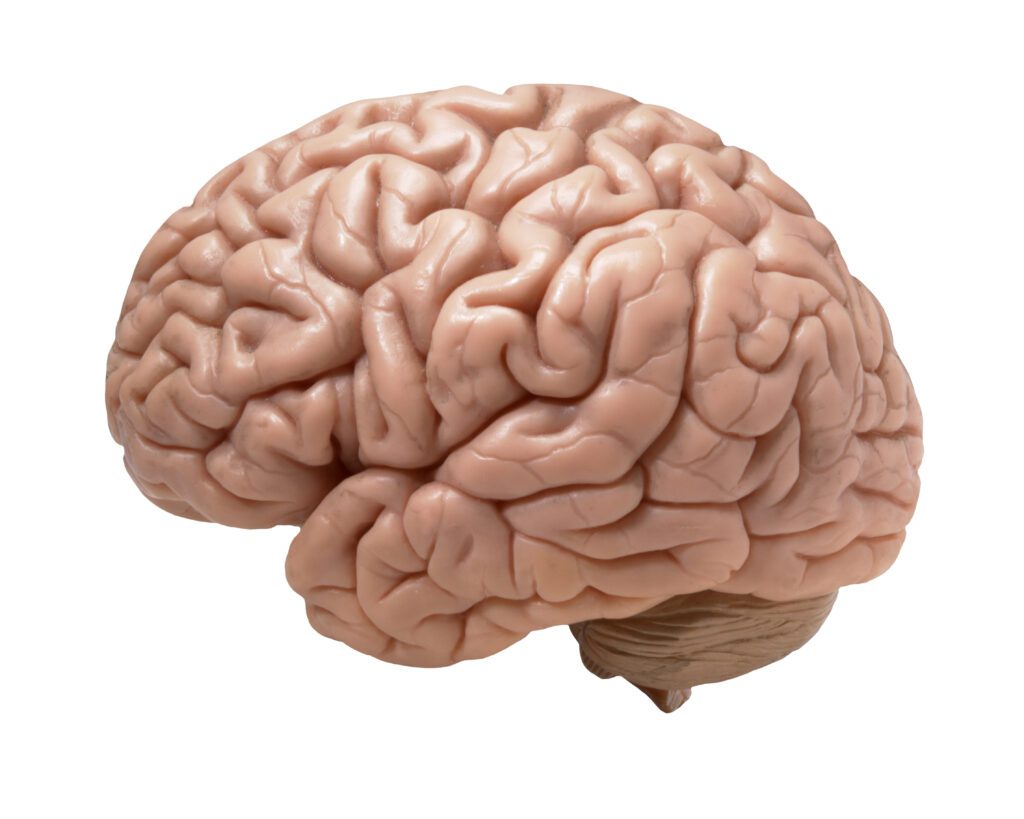
Reason 3: Poor Posture Can Affect Brain Function and Stress
Your brain is constantly listening to your body.
Every time you move, balance, breathe, twist, walk, reach, or adjust your posture, your brain receives information. These signals help your brain understand where you are in space and how to co-ordinate your body.
This is called proprioception.
You can think of proprioception as your body’s internal GPS system. It helps you know where your head, spine, arms, legs, and joints are without having to look at them. Healthy spinal movement provides important input to the brain. When the spine becomes stiff, distorted, or poorly controlled, the brain may receive less accurate information.
This is one reason poor posture symptoms can go beyond pain.
Some people feel stiff, tired, tense, off-balance, or less co-ordinated. Others notice headaches, neck tension, back pain, shallow breathing, or reduced mobility. Some simply feel older than they should.
There is also growing interest in the relationship between posture, the nervous system, and stress. When the body stays in a collapsed or guarded position, it may reinforce patterns of tension. When the spine moves better and posture improves, many people report feeling more open, more mobile, and more confident.
We need to be careful not to overstate this. Posture is not the only driver of stress. Life, sleep, trauma, nutrition, relationships, work, and exercise all play a role. But posture is one of the physical inputs that can influence how the nervous system functions.
That is why today’s corrective chiropractic care in Kelowna is not just about cracking joints or chasing pain. It is about assessing the structure, understanding the function, and creating a plan designed to help the body move and adapt better.
You can learn more about our corrective approach on our page about Advanced Certified Chiropractic BioPhysics® care.
Bad Posture Symptoms Many People Miss
Most people think poor posture is obvious. Sometimes it is. A person may have a forward head, rounded shoulders, a hunched upper back, or a visible lean to one side.
But many bad posture symptoms are more subtle.
You may notice neck tension, back pain, headaches, shallow breathing, tight hips, tired legs, poor balance, reduced shoulder motion, uneven shoe wear, or stiffness after sitting. You may feel like you need to stretch all the time, but the tightness keeps coming back. You may notice that one side of your body moves better than the other.
In kids and teens, posture problems may show up as slouching, uneven shoulders, forward head posture, one hip sitting higher, reduced flexibility, or discomfort after sport, school, gaming, or phone use.
In adults, posture often reflects years of sitting, driving, computer work, stress, injury, and limited movement.
In older adults, posture changes may affect confidence, walking, balance, breathing, and independence.
The important point is this: pain is not always the first sign that something is wrong.
Poor posture spine patterns can build quietly over time. That is why waiting until you are in pain may not be the best strategy.
Is Bad Posture Reversible?
This is one of the most common questions people ask.
The honest answer is: it depends.
Age matters. Severity matters. How long the posture has been there matters. Bone structure, spinal degeneration, scoliosis, hyperkyphosis, injuries, disc problems, and overall health all matter. But in many cases, posture can improve with the right assessment, the right plan, and enough consistency.
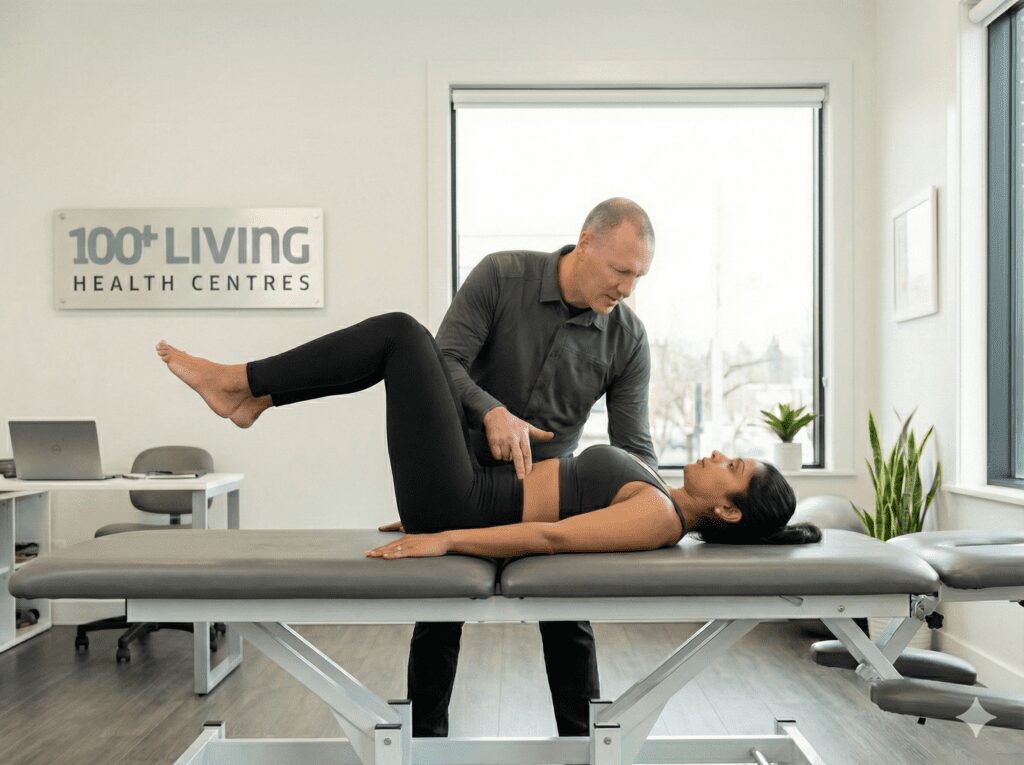
At 100+Living Health Centres, we use an evidence-informed structural approach called Chiropractic BioPhysics®, or CBP®. This may include digital X-rays when clinically appropriate, posture analysis, neurological assessment, mirror image rehabilitation, corrective exercises, 3-D spinal traction, Denneroll orthotics, and progress imaging.
The key is that corrective care should not be random.
If the head has shifted forward, the correction should be specific. If the spine has lost a normal curve, the strategy should be specific. If the pelvis is shifted or rotated, the rehabilitation should be based on objective findings.
Rather than guessing, we measure.
Rather than simply chasing symptoms, we work to understand the structure and function underneath them.
At What Age Should You Worry About Posture?
Posture matters at every age.
For children, posture is part of healthy development. Today’s kids spend more time sitting, looking down at devices, carrying backpacks, and participating in repetitive sports than many previous generations. That does not mean every child has a problem, but it does mean parents should pay attention.
For teenagers, posture often changes during growth spurts. This is also the age when scoliosis, forward head posture, sports-related imbalances, and poor movement habits may become more obvious.
For adults, posture often reflects work habits, stress, old injuries, lack of mobility, and years of sitting.
For older adults, posture can become directly connected to independence. A more rounded, forward posture may make it harder to breathe deeply, walk confidently, look ahead, and move with ease.
So the real answer is simple: do not wait for age to make posture important.
It already is.
What Can You Do About the Long-Term Effects of Bad Posture?
The first step is awareness.
Look at your posture from the side. Is your ear sitting over your shoulder, or is your head drifting forward? Are your shoulders open, or are they rounded in? Does your upper back look tall, or is it collapsing forward? From the front, are your shoulders and hips level? From the back, does your spine appear centred?
The next step is movement.
Walk daily. Strengthen your back and hips. Build core strength. Take breaks from sitting. Train your balance. Breathe deeply. Spend time outdoors. Reduce the amount of time spent looking down at devices.
But for many people, exercise alone is not enough.
If the spine has developed a structural shift, a specific corrective plan may be needed. This is where posture-based chiropractic care may help. The goal is to identify the pattern, correct what can be corrected, improve movement, support the nervous system, and help the person build better habits for life.
For a deeper look at why this matters, visit our article on spinal health and longevity.
A Better Way to Think About Posture
Checking in with chiropractic care only when you are hurting is like buying a smartphone and only using the calculator.
There is so much more available.
Modern corrective chiropractic care is not only about pain relief. It is about posture, spinal health, neurological function, movement, recovery, and long-term quality of life.
That does not mean chiropractic care replaces medical care, exercise, nutrition, sleep, or stress management. It does not. But it can be an important part of a bigger health strategy, especially for people who want to stay active, mobile, and independent as they age.
At 100+Living Health Centres, our mission is to help create the next Blue Zone on the planet right here in the Okanagan. That mission starts with helping people understand that healthy ageing is not an accident.
It is built.
It is built through movement, posture, nutrition, sleep, recovery, purpose, relationships, and community.
And for many people, it starts with finally paying attention to the spine and nervous system.
A Long, Strong, Healthy Life Starts With Better Inputs
Your nervous system controls and co-ordinates the body. Your spine protects the spinal cord and helps create the movement your brain depends on. Your posture influences how you breathe, move, balance, and adapt.
That is why the side effects of bad posture should not be ignored.
Poor posture may contribute to pain, stiffness, fatigue, reduced mobility, shallow breathing, poor balance, and loss of confidence. Over time, severe postural changes may also be connected to reduced independence and poorer health outcomes.
But there is hope.
The body is adaptable. The nervous system can change. Movement can improve. Posture can often be supported with the right plan and the right consistency.
At 100+Living Health Centres in Kelowna, we help people understand what their posture is telling them and what options may be available.
Schedule a 15-minute pre-consultation discovery call with 100+Living Health Centres to see whether our posture correction and corrective chiropractic approach may be a fit for you.
Designed for Health. Engineered for Longevity.
Take the Next Step
Don’t settle for temporary relief. Get care that helps correct the cause of your condition.
Step 1:
Start with a free 10-minute phone consult to discuss your symptoms and see if our approach is right for you.
Step 2:
Book your first comprehensive exam and consultation and get started.